

We never imagined we would be speaking publicly about losing two daughters to a rare genetic condition, or writing about the realities of IVF policy in the UK. But after everything our family has experienced, we feel compelled to share our story in the hope that it may help raise awareness for other families facing similar circumstances.
We are David and Juliette from Warwickshire, and we carry a confirmed genetic mutation for autosomal recessive polycystic kidney disease (ARPKD), a rare inherited condition affecting the kidneys and liver.
Like many carriers of recessive genetic conditions, we had no idea. We were healthy, had no symptoms and no family history that would ever have led us to suspect anything was wrong. We already had our daughter, Wynter, who was born healthy and unaffected, and we were simply excited to grow our family.
During Juliette's pregnancy with our second daughter, Hope, everything initially appeared normal. It was not until 34 weeks that concerns were raised during a growth scan, when doctors noticed there was very little amniotic fluid surrounding the baby.
That appointment led to another, and then another, until we found ourselves sitting in front of consultants hearing words no parents are ever prepared for. Hope had ARPKD, and her condition was considered incompatible with life.
ARPKD causes cysts to form in the kidneys, preventing them from functioning properly. In severe cases, the kidneys cannot produce enough urine during pregnancy, meaning there is insufficient amniotic fluid for proper lung development. We learned that babies with severe ARPKD often die before birth, shortly after birth, or require intensive medical intervention to survive.
Our lives changed in an instant.
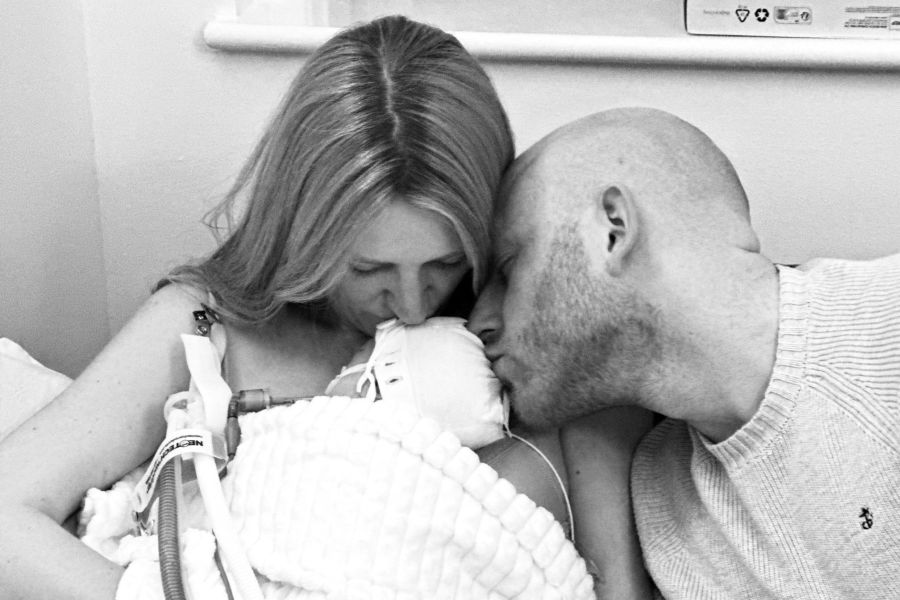
Hope was born and survived for 30 precious hours.
Those hours are impossible to fully describe. They were filled with overwhelming love, unbearable grief and the desperate wish that somehow things could be different. We held her, spoke to her, loved her and became her parents, all while preparing to say goodbye.
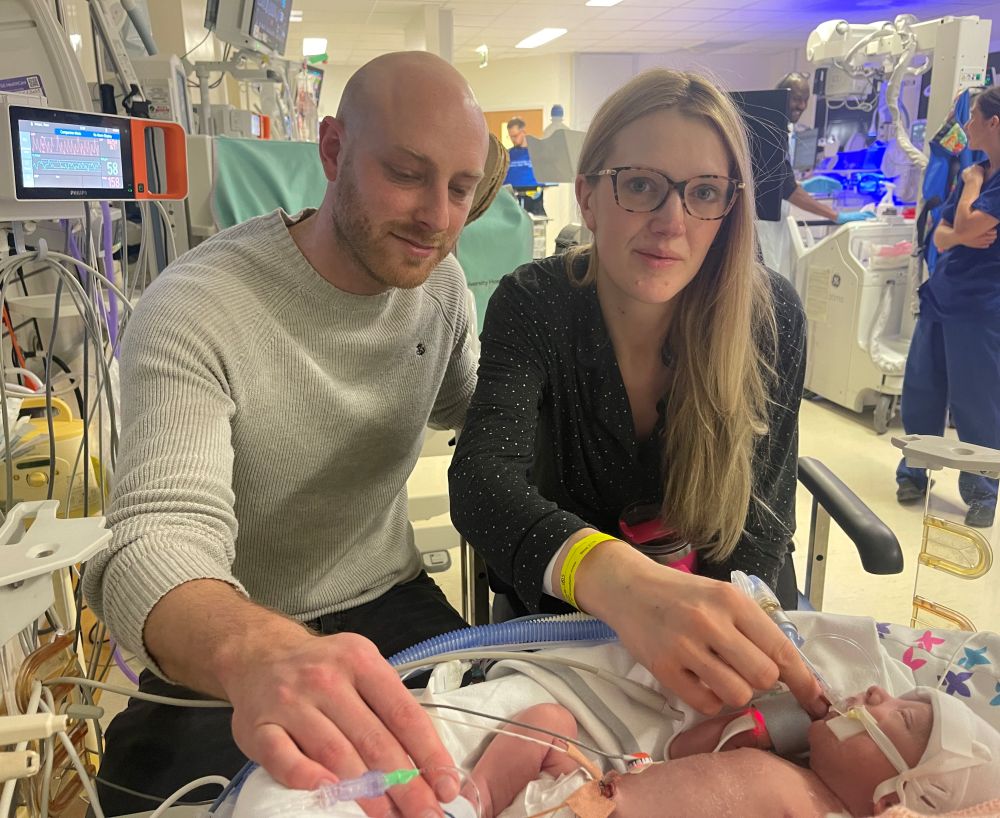
After losing Hope, we underwent genetic testing and discovered that we are both carriers of ARPKD. Because the condition is inherited in an autosomal recessive way, every pregnancy carries a one-in-four chance of being affected.
What many people do not understand about genetic loss is that the fear does not end after one experience. It follows you into every future pregnancy, every scan and every moment of hope.
On what would have been Hope's first birthday, we discovered we were pregnant again.
There was happiness, but it was almost immediately overshadowed by fear. We underwent non-invasive prenatal testing followed by chorionic villus sampling, an invasive procedure used to diagnose genetic conditions during pregnancy.
Then came the news we had been dreading.
Our baby also had ARPKD.
Once again, we found ourselves facing decisions no parent should ever have to make. We knew the suffering Hope had endured. We knew the risks associated with continuing another pregnancy affected by severe ARPKD. After devastating discussions with medical professionals, we made the heartbreaking decision to end the pregnancy at 14 weeks.
We named our daughter Faith.
Faith was deeply wanted, deeply loved and remains an irreplaceable part of our family alongside Hope.
Following these experiences, we began exploring IVF with preimplantation genetic testing (PGT-M). For families with inherited genetic conditions, PGT-M offers the possibility of creating embryos through IVF and testing them before pregnancy to ensure they are unaffected.
For us, this was not about infertility. It was about trying to avoid repeated trauma, repeated loss and the possibility of another child suffering from a devastating condition.
However, we were told we do not qualify for NHS-funded IVF with PGT-M because we already have one healthy child.
We understand that NHS resources are finite and that difficult decisions must be made around funding and prioritisation. But from our lived experience, there appears to be a significant gap in policy for families affected by inherited genetic conditions who are not infertile, but are instead trying to prevent the recurrence of serious disease.
At times, it feels as though the system unintentionally reduces our losses to statistics because we already have one child at home. But grief does not work that way. Hope and Faith mattered. They were not made less important because we already had Wynter.
There is also a broader conversation to be had about the emotional, physical, and financial costs associated with repeated high-risk pregnancies, neonatal intensive care, invasive testing, surgical deliveries and pregnancy termination, compared with preventative reproductive treatment pathways such as PGT-M.
We know we are not alone. Since sharing our story, we have heard from other families facing similar barriers to accessing treatment despite carrying serious inherited conditions.
We are sharing our experience not because we expect sympathy, but because we hope awareness can lead to understanding, and understanding can eventually lead to change.
We know policy change takes time. We also know that any future changes may come too late for our own circumstances. But if speaking openly about Hope and Faith helps another family avoid the heartbreak we have experienced, then their lives will continue to have an impact beyond the short time we were able to hold them.
Hope mattered.
Faith mattered.
They always will.
For more information, please visit our family fundraising page, In Loving Memory of Hope and Faith, which shares our story in greater detail.
Related Articles


The Origins of Preimplantation Genetic Testing
The third session of 'What Does Genomics Mean for Fertility Treatment?' – the 2025 Annual Conference of PET – saw the PGT pioneer Professor Alan Handyside give a keynote presentation...

Preimplantation Genetic Testing: Barriers to Access
The latest PET event focused on access to and funding for preimplantation genetic testing, specifically in relation to monogenic conditions and chromosomal structural rearrangements...


GRASPing the risk: Managing complex patients in IVF
More research to better understand the needs of IVF patients with complicated conditions, is necessary to understand the risks they face, writes Dr Thanos Papathanasiou…
Equity of access: Not for northern NHS patients requiring PGT-M
The most northerly fertility clinic offering NHS funded PGT-M and PGT-SR in England is in Nottingham. This means there are now around 100 patients residing in the north of England who are unable to access the NHS fertility services they need locally to avoid transmitting a genetic condition to their children…