



For an issue that affects hundreds of thousands of modern families, peer-to-peer sperm donation has historically operated in the shadows. In 2026, that is changing.
Surprisingly few conversations have brought together everyone with a stake in unregulated sperm donation (see BioNews 1307). The issue spans digital platforms, healthcare, law, family life and personal relationships, with people working in different communities, holding different priorities, and often reluctant to engage owing to legal uncertainty, privacy concerns and fear of judgment.
In February 2026, the Platform Owner Action Research Group on the Online Sperm Donation Project gathered an unprecedented roundtable to discuss one of the most challenging and increasingly important questions in modern fertility care: how do we bring traceability to the unregulated market without driving users further underground?
The meeting, 'Tracking Donor Sperm in the Unregulated Fertility Market', brought together 35 voices that do not often share the same room. Donor-conceived people, donors, recipients, co-parents, fertility clinics, sperm banks, lawyers, researchers, bioethicists, data ethicists and owners of online sperm donation platforms all took part. While participants brought differing perspectives and priorities, there was a common recognition that family-building pathways are evolving at high speed and that existing systems, designed in a different era, have a hard time keeping up and reflecting this reality.
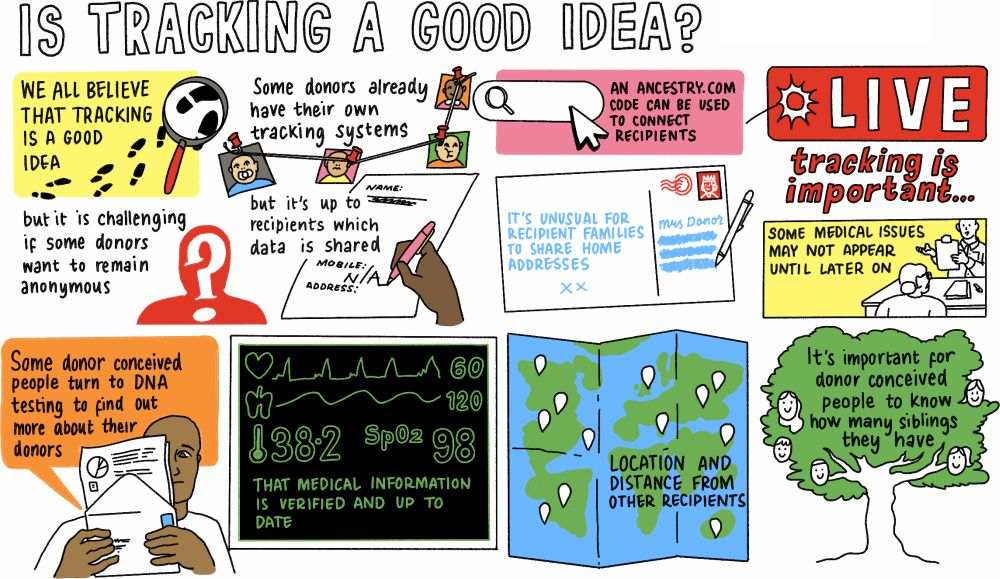
The purpose of the meeting was not to advocate for a particular solution, but to explore whether some form of register could address concerns that arise when sperm donation takes place outside regulated settings.
Throughout the discussions, participants highlighted the consequences of having no mechanism to record or share information. Recipients may have little way of verifying a donor's medical history, identity or the number of families created through donation. Donor-conceived people may struggle to access updated health information or connect with donor-conceived siblings and biological relatives.
In many cases, families remain dependent on the donor to facilitate future contact and information sharing. This lack of a structured system leaves donors with an ongoing, unmoderated responsibility to manage family contact manually and a lack of secure channels to update their health data as they age.
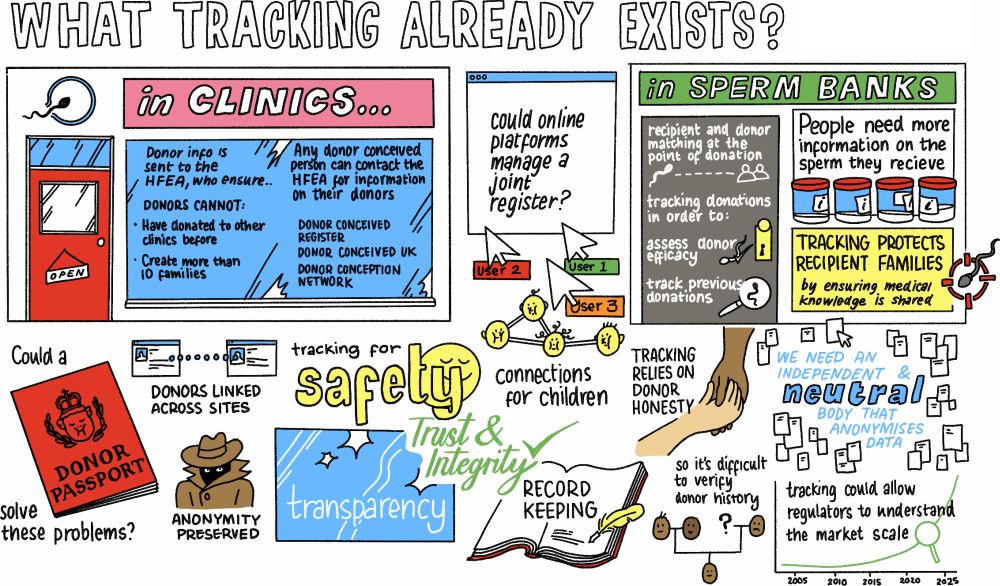
The idea of tracking raises concerns of its own
Donors and recipients may worry about privacy, confidentiality and misconceptions around legal parenthood or financial responsibilities. Any system based largely on self-reported information could contain inaccuracies, while incomplete or outdated records may provide a false sense of reassurance. Participants recognised that a poorly designed system could discourage engagement rather than promote it.
What emerged from the discussions was not consensus, but a series of principles that many participants felt were important.
Transparency, accuracy and trust featured prominently. Recipients expressed a desire for access to medical and genetic information, alongside information about the number of donor-conceived children created from a donor. Donor-conceived people highlighted the importance of access to donor and sibling information, potentially through carefully managed arrangements. Donors recognised the value of reducing their long-term administrative burdens, and providing them with information about births, while having less responsibility for establishing and maintaining connections between families.
There was also discussion about the types of information that might be useful. Suggestions ranged from donors' medical history and genetic screening data, to their characteristics and fertility-related information. Participants emphasised that any viable system must provide a secure and continuously updated data pipeline, capable of handling complex health disclosures dynamically, while adhering to evolving digital health and data privacy laws.
Perhaps one of the most striking themes was the suggestion that any future system should be collaborative rather than fragmented. Participants considered whether a central register – national or even international in scope – could bring together information from online platforms, clinics and sperm banks. Many favoured a voluntary model built around trust, ethical practice and verification rather than compulsion.
Questions of governance and regulation
Participants discussed whether information could be contributed by platforms, clinics or official bodies and whether identity verification measures could help improve confidence in the accuracy of records. At the same time, concerns were raised about privacy and the potential for misuse of sensitive information. Several participants highlighted the need to protect data from inappropriate access, including by organisations or individuals who might seek to use it for purposes far removed from those originally intended.
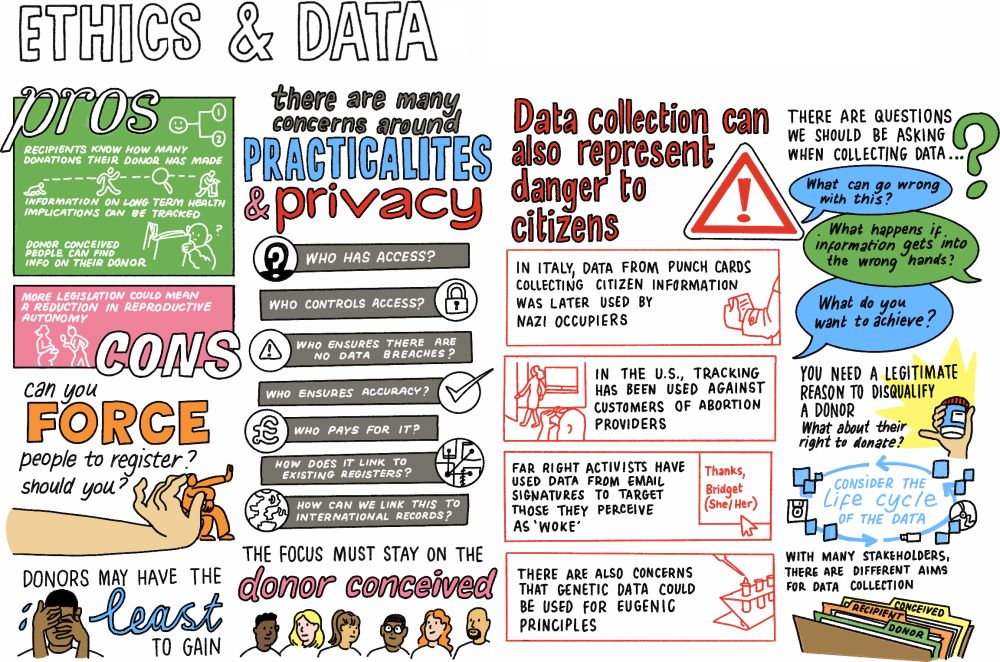
Language also mattered. Some felt that the term 'tracking system' implied surveillance and could deter participation. A more neutral description, such as a 'register', was considered potentially more acceptable and reflective of its purpose.
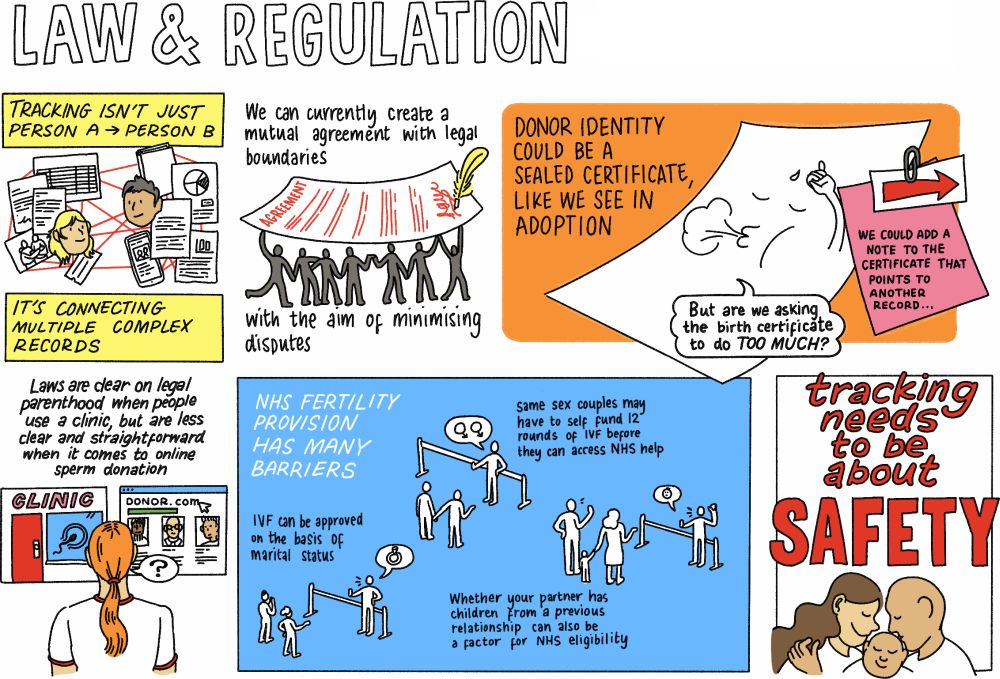
There was even debate about whether changes to birth registration could play a role in the future. While such changes might help normalise donor conception and support access to information, participants recognised that birth certificates alone would not provide dynamic health information or ongoing updates.
The value of open discussion
What made the meeting particularly noteworthy was not that everyone agreed. They did not. Rather, it was that people with very different experiences and interests were willing to engage in open discussion about difficult issues.
As family-building continues to evolve, conversations about information, identity, privacy and connection are unlikely to disappear. The February meeting demonstrated that there is both appetite and opportunity for collaboration across sectors that have often operated separately.
While a definitive roadmap was not the outcome, the event achieved something far more actionable: it established the foundational principles for a voluntary trust framework. By aligning on transparency, verification, and data security, the basis for a self-improving ecosystem was formed – one that can bring more light to peer-to-peer sperm donation today. There was a shared realisation that the future relies on building dynamic frameworks that go beyond traditional clinical boundaries.
The first building blocks have now been laid, with the potential for a collaborative, decentralised trust network that could continue the conversation to shape how donors, recipients, co-parents and donor-conceived people are supported in the years ahead.
If February showed anything, it is that when diverse voices come together, it becomes possible not only to identify problems, but to imagine what better solutions might look like.
The Platform Owner Action Research Group comprised two people who own or run online sperm donation platforms (Sofie Hafström Kritsotaki and Erika Tranfield) and three researchers (Dr Aleks Krotoski, Dr Alice Lemkes and Dr Rhys Turner-Moore). The Group worked together over the course of a year to imagine, consider and take action towards ideal futures for online sperm donation. The Group was part of the final phase of a four-year multidisciplinary Online Sperm Donation Project. Led by Leeds Beckett University, it involved ten researchers from five organisations, ran from 2022-2026, and was supported by the Economic and Social Research Council. The live scribe illustrations featured in this article were created by Bridget Meyne.
Related Articles

A donor's perspective on rethinking fertility access and the future of family‑building
An online sperm donor explains how practical changes could help recognise and support the reality of modern family-building...

'Joe Donor' in Scotland? Possible Scots law approaches to sperm donors and legal parentage
Following an English court's decision that a prolific sperm donor could not be listed on a child's birth certificate, Robert Gilmour and Professor Gillian Black examine how the same situation would be treated in Scots law...
HFEA 'concerned' about unregulated sperm donation
The Human Fertilisation and Embryology Authority has issued a new set of frequently asked questions about unregulated sperm donation, due to increasing concerns regarding exploitation and serial sperm donors...
A deep dive into digital platforms powering DIY sperm donation
Online, unregulated sperm donation has been hitting the headlines in recent years, but a question mark remains over the platforms powering the practice. Dr Francesca Taylor-Phillips, Professor Georgina Jones and Dr Rhys Turner-Moore investigate...
Sperm donor matching app sidesteps UK regulation
A new app which allows sperm donors to seek private arrangements with intended parents, bypassing donor regulations, has become available in the UK...
'Super' sperm donors not so super, warns judge
PET Trustee and family law solicitor Natalie Sutherland discusses the case of A v B and others, recently made public by a senior UK judge...
Moving beyond a 'just say no' approach to informal donor conception
Informal sperm donation is actively discouraged in a number of jurisdicitions, including the UK. Unfortunately, this means there is little discussion about the subject too, writes Dr Leah Gilman...
Known Unknowns: The Pros, Cons and Consequences of Known Donation
Donor conception was the focus of the event Known Unknowns: The Pros, Cons and Consequences of Known Donation, held online by the Progress Educational Trust (PET), the charity that publishes BioNews, in partnership with the University of Manchester...
TV Review: Four men, 175 babies: Britain's Super Sperm Donors
As an embryologist working in a fertility clinic, I frequently use donor sperm to help individuals and couples become parents. In my little fertility clinic bubble, sperm donation is a highly regulated process...