

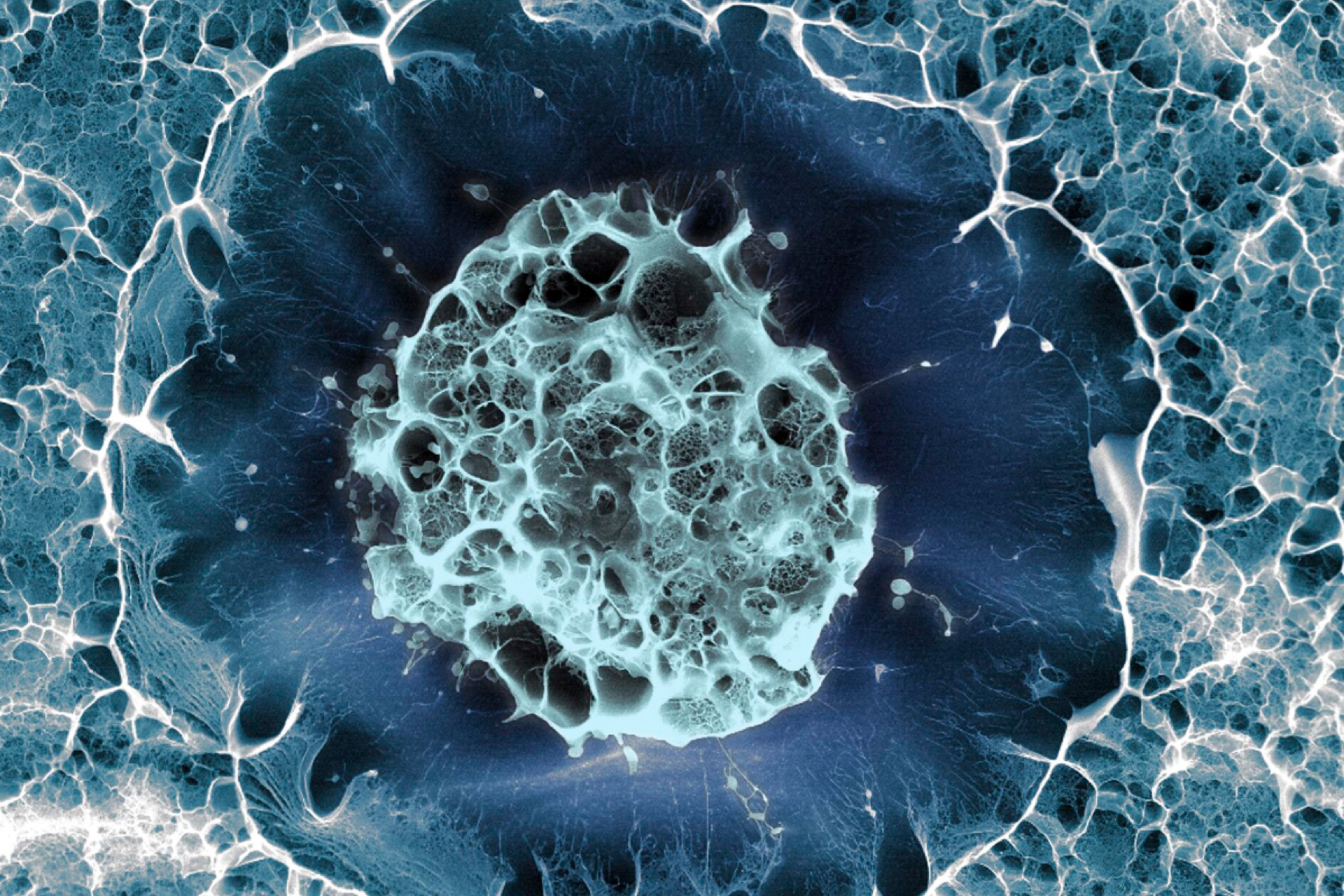
A receptor on the surface of blood stem cells has been found to regulate cell growth, raising the possibility that activating it could offer a new therapeutic strategy for acute myeloid leukaemia (AML).
The study, published in Nature Communications, found that a protein called succinate receptor 1 (SUCNR1) helps keep blood stem cells in a healthy, balanced state. When levels of this receptor are low, stem cells can grow out of control and develop into cancer cells. A multinational team of scientists has shown that patients with AML who had low levels of SUCNR1 had poorer survival outcomes.
Dr Lorena Arranz from the University of Oslo, Norway, who led the study, said: 'We have identified signals that influence the development of this type of leukaemia and that we can exploit to fight the cancer.'
AML is an aggressive form of blood cancer that originates in the bone marrow, where blood cells are produced. According to Cancer Research UK, people diagnosed with AML have a five-year survival rate of approximately 20 percent. It is most common in people over 65, and the only potentially curative treatment is a stem cell transplant, which is too intensive for many older patients.
Blood stem cells have the unique ability to develop into all types of blood cells, including red blood cells, white blood cells, and platelets. In healthy people, signals from their surrounding environment tell stem cells whether to remain dormant or divide and produce new blood cells. In AML, however, this balance is disrupted, and stem cells develop into cancer cells rather than healthy blood cells.
The researchers found that SUCNR1 acts as this brake. When activated by the molecule succinate, it suppresses two cancer-promoting proteins, S100A8 and S100A9. Without SUCNR1 to control them, stem cells can expand uncontrolled. In experiments using mouse models, the team showed they could influence the development of leukaemia by altering levels of succinate, SUCNR1, and S100A9.
'The system has both an accelerator and a brake. The accelerator tells the stem cell to divide and make more cells, while the brake tells the stem cell to stay put,' Dr Arranz explained. 'Succinate has typically been seen as a "bad guy" that drives the progression and worsening of this form of blood cancer. We have now discovered a new, protective side to succinate, acting on SUCNR1. The next step will be to explore how we can harness this in treatment.'
First author, Dr Vincent Cuminetti, from the University of Oslo, said: 'We believe the study can help develop better personalised treatments for patients based on SUCNR1 levels in the future.'
Sources and References
Related Articles


Genes driving abnormal growth of mutated blood cells identified
Somatic mutations in 17 genes have been associated with the aberrant growth and maturation of blood cells, providing new insights into causes of cancer and heart disease...
Potential genetic target for leukaemia treatment identified
The biological mechanism linking a certain gene mutation with poor prognosis in acute myeloid leukaemia has been discovered...