

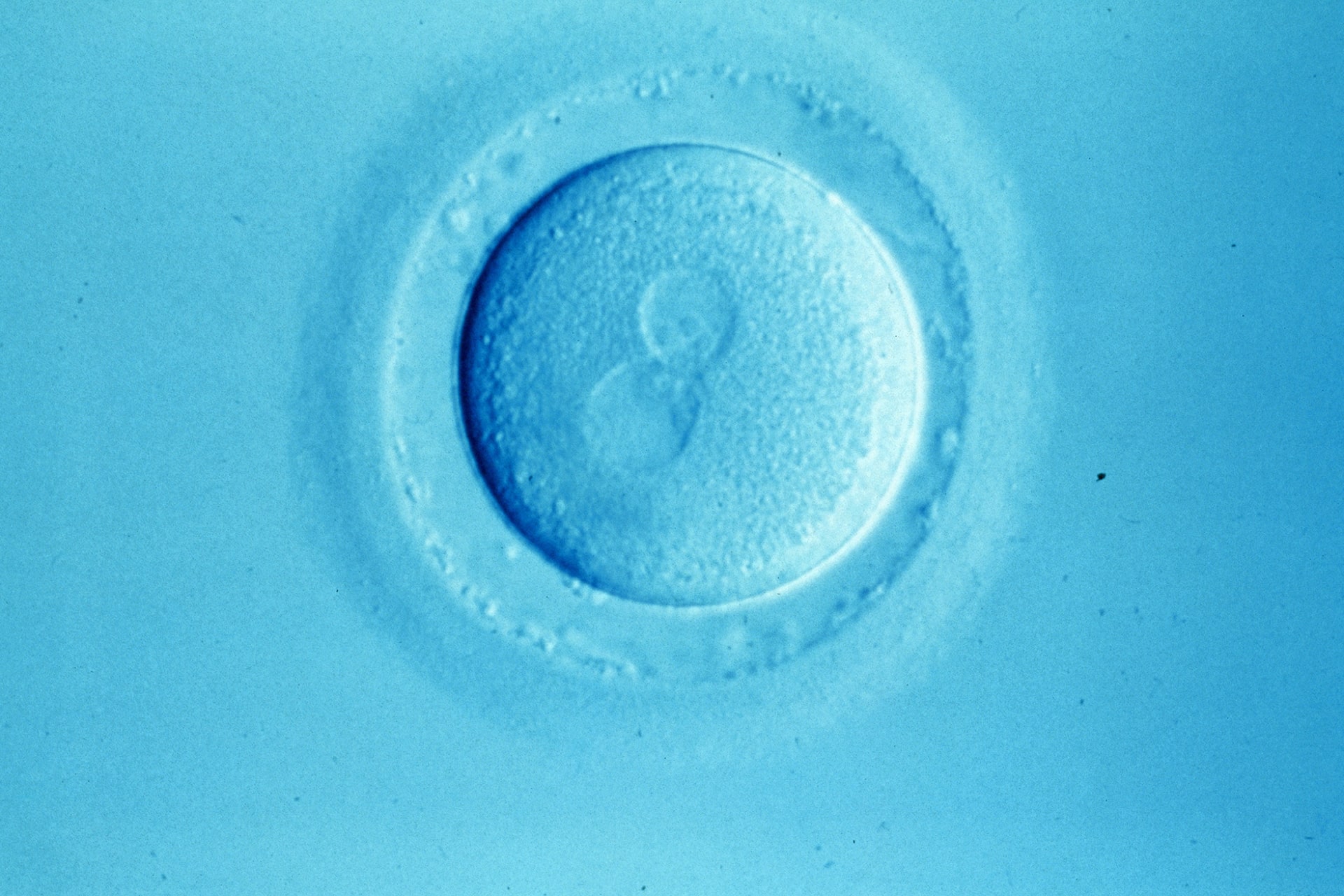
In August, the Royal College of Obstetricians and Gynaecologists (RCOG) published their Scientific Impact Paper on 'social' or 'elective' egg freezing, a technology which increasing numbers of women are turning to in a bid to extend their fertile window and enable them to have children at an older age.
The report notes that the number of egg freezing cycles has trebled between 2016 and 2021 and that the technology is now the fastest-growing fertility treatment in the UK. Egg freezing has also been in the media recently with the US Congresswoman Alexandria Ocasio-Cortez revealing that, at 36, she was going through the process of freezing her eggs to allow her to focus on her career (see BioNews 1352) and also with news that Chlesea football club are to become the first in the Women's Super League to cover the cost of egg freezing for their players (see BioNews 1356).
Our research and that of others, as discussed by the RCOG, has shown that despite a persistent narrative of egg freezing being used by 'career women', most users of the technology undergo the process due to the lack of a suitable partner. These women commonly report the desire to choose the right partner with whom to have a child, a partner equally as committed to parenthood as themselves. They draw upon egg freezing to allow them more time to find such a partner, and to avoid engaging in what I have termed 'panic-partnering' – that is entering into a relationship they might otherwise not consider if they were not at risk of unwanted childlessness.
As well as offering comments on the reasons behind women's increasing use of social egg freezing, the RCOG impact paper drew attention to several other important issues that are often glossed over in less nuanced public discussions of egg freezing, particularly those relating to success rates, the non-use of previously frozen eggs and the emotional demands and support needs of users of egg freezing.
For users of IVF, 'success rates' are most often interpreted as the chance of a live birth per embryo transfer. For users of egg freezing, however, the meaning of 'success' is potentially much more nuanced. It might refer to retrieving enough mature eggs for freezing – a number that can vary considerably according to a woman's age at freezing and the number of cycles she is prepared to undertake. For others, egg freezing may be considered successful if it provides a sense of reassurance or allows them to feel less rushed in their search for a partner with whom to consider parenthood.
At other stages of the process, 'success' might refer to the number of eggs surviving thawing, the proportion successfully fertilised, the number developing to the blastocyst stage, and, ultimately, the live birth rate per embryo transfer or the cumulative live birth rate – the chance of achieving a live birth from all the eggs stored. For most patients, however, using their stored eggs will always be a 'Plan B' only after an attempt with a future partner, we therefore must not underestimate the importance of 'peace of mind' and 'relief of pressure' as a goal of freezing.
However, this makes communicating and interpreting egg freezing 'success rates' particularly difficult. Evidence from the UK, USA and Australia suggests that prospective users can struggle to make sense of the information provided about success rates, while advertising for egg freezing services may report clinical pregnancy rather than live birth rates, draw on data from younger egg donors who are not representative of the typical user, or highlight outcomes achieved by highly experienced clinics that may not be readily replicated elsewhere.
Yet, evidence shows that the chances of a future live birth are strongly influenced by age at freezing, the number of eggs stored and clinic expertise. As egg quality declines with age, older women generally need to store more eggs than younger women to achieve a comparable chance of a future live birth. A large Spanish study found cumulative live birth rates of more than 90 percent among women who froze their eggs at 35 or under, but this required the use of an average of 24 eggs – potentially necessitating several cycles of egg freezing even among younger women as well as multiple embryo transfers. Similarly, modelling by Goldman et al suggested that a woman freezing her eggs before 35 might need around 20 eggs for an almost 90 percent chance of a future live birth, compared with around 40 eggs at age 39.
Previous Human Fertilisation and Embryology Authority (HFEA) data have shown that most egg-freezing cycles in the UK have been undertaken by a small number of clinics, predominantly concentrated in London. The outcomes achieved by these high-volume centres, however, may not be representative of those achieved by clinics undertaking relatively few egg-freezing and thawing cycles. Even these specialist clinics, moreover, may not achieve the outcomes reported by research centres using predominantly younger eggs.
The HFEA provides guidance to clinics on the presentation of success rates, including the importance of using recent data and presenting live birth rates per embryo transfer broken down by maternal age. In practice, however, such information is not always readily available or easy to interpret. Clinics may be reluctant to publish their outcomes, may not yet have undertaken enough thawing cycles for the data to be meaningful, or may simply lack sufficient numbers to provide reliable age-specific estimates. This may be in part because the number of freezing cycles continues to dwarf the number of thaw cycles performed, with only a relatively small proportion (between six and 38 percent) of users returning to the clinic to use their eggs.
Studies of previous users of egg freezing suggest that those who choose not to use their eggs follow diverse paths, with some going on to conceive naturally, via IVF or reproductive donation. Others live childfree, become step-parents, or hold out hope or expectation that they might become a mother in the future.
While users of egg freezing can keep their eggs frozen for up to 55 years in the UK, following the 2022 extension to storage time limits (see BioNews 1111 and 1112), this does not mean that the question of what to do with unused eggs can simply be deferred indefinitely. In practice, decisions about disposal are often difficult, and there is evidence that preferences about disposition may change considerably over the years that eggs remain in storage.
Given the significance of these choices, and the fact that they are often made many years after the initial decision to freeze, clinics have a responsibility to provide tailored counselling and information at the point when women are actually grappling with disposition decisions, rather than relying solely on the information given at the time of initial consent.
While often perceived (and promoted) as a form of reproductive insurance, the RCOG and others note that it is essential that women undertaking egg freezing do so with a full understanding of the cost, risk and likelihood of success. We would further add that reporting of egg freezing should be cautious of presenting the technology as an individual solution to the fundamentally social problem of reproductive timing, particularly when the costs, risks and burdens of this solution are borne disproportionately – and often exclusively – by women, through both their bodies and their own financial resources.
Related Articles

US Congresswoman documents freezing her eggs
US Congresswoman Alexandria Ocasio-Cortez has announced that she is undergoing egg freezing and is sharing details of the process on social media...

UK regulation is obstructing donation of frozen eggs to research
People want to donate their frozen eggs to research. Current regulations are making it hard, say Dr Jennifer Langford, Dr Molly Johnston,and Dr Joanna Demaree Cotton...


Understanding Egg Donation: The Give and Take
This event from PET brought together clinical, social and lived perspectives on egg donation: exploring the needs and interests of donors, recipients, and donor-conceived people alike...
Egg donation ads breached advertising standards
The UK's Advertising Standards Authority has ruled that a fertility clinic's advertisements promoting egg donation 'trivialised the decision to donate eggs'...
Podcast Review: Harvest – is freezing my eggs the answer?
Harvest stands out because it speaks directly to the experiences of women today and becomes consistently more and more compelling, having a profound effect on the audience writes Zeenat Beebeejaun...

Egg donation, egg freezing and IVF: Putting them in perspective
PET welcomes a new Parliamentary inquiry into egg donation and egg freezing, and encourages BioNews readers to respond, but also has some reservations...