

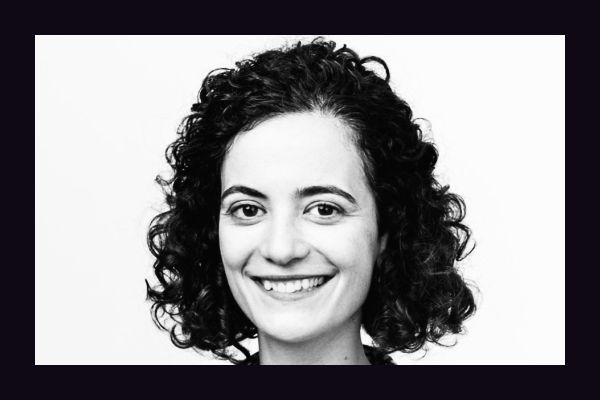
We were deeply saddened at PET (the Progress Educational Trust) to learn that Dr Marta Shahbazi, group leader at the MRC Laboratory of Molecular Biology in Cambridge, was one of the people killed in last week's rail collision in the Spanish province of Toledo.
Marta (aged 41) – and another researcher who was killed in the collision, Dr Tamara González Costa (aged 31) – were both travelling to Andalucía to attend a conference of the Spanish Society for Developmental Biology, where Marta was due to receive an award for scientific excellence.
Marta, who is is survived by her husband and two children, was a prominent and inspiring voice in research involving human embryos and stem-cell-based embryo models (SCBEMs) – within the UK, and also internationally. She took a keen interest not just in scientific aspects of early human development, but also in accompanying ethical and policy questions.
A colleague at the University of Cambridge, Professor Kathy Niakan, offers the following tribute.
Marta was an exceptionally talented scientist who made several seminal contributions to the field that will have a lasting impact. This includes pioneering work extending human embryo culture, investigating the consequences of human embryo aneuploidy, studying how the embryo coordinates tissue morphogenesis and collaborating to establish advanced SCBEMs.
In addition to her academic leadership, she actively contributed to public engagement and dialogues helping inform understanding of her research and responsible governance. She was on a clear upward trajectory, a generous colleague and terrific mentor to early career researchers. She will be so deeply missed.
We last spoke to Marta at a conference held in Cambridge in September 2025, to celebrate the centenary of the IVF pioneer Robert Edwards. In particular, we discussed two of Marta's recent journal articles with her – one that had been published in Cell Stem Cell the previous year, and one that had been published in Development just two weeks earlier. Both articles are insightful and enduringly significant.
The 2024 article in Cell Stem Cell (written with Professor Vincent Pasque) provides an overview of fast-moving developments in SCBEM-related research, and discusses 'limitations that need to be overcome before these models can be broadly applied'. The article offers the following upbeat conclusion.
Clearly, SCBEMs are not embryos. The cell type composition, proportion, and spatial cellular organisation are not perfectly recapitulated. However, the fact that they are imperfect – and hence not embryos – makes them an attractive experimental system, full of advantages and possibilities. Advances in SCBEMs not only open an era of significant scientific discovery but also promise to shed light on the causes of pregnancy disorders, making this an extraordinarily exciting time for the field.
The subsequent article in Development adds an important caveat to this. Marta and her coauthors – Professor Mina Popovic, Dr Catello Scarica and Professor Susana Chuva de Sousa Lopes – explain that while SCBEMs are undoubtedly important and useful, they do not eliminate the need to study 'developmentally competent human embryos', which 'remain the most faithful system for studying the biological events of early cell fate specification, implantation and early differentiation'.
Marta and her colleagues discuss 'a significant disconnect between clinical practice and scientific opportunity', which means that although an enormous number of the IVF embryos created in fertility clinics are never used in treatment, researchers are only ever given the opportunity to study a tiny proportion of these unused embryos.
Good-quality embryos are routinely discarded or left in storage indefinitely, while research aimed at reducing infertility, miscarriage and congenital disease is hampered by a lack of available material. In the UK alone, more than 170,000 embryos were discarded in 2019, yet fewer than one percent – a total of only 675 embryos – were donated to research.
Marta and her colleagues go on to argue that addressing this issue is 'not just a question of clinical or ethical policy, but a pressing global research imperative'. They conclude with the following call for action.
If we aspire to a future in which miscarriage is less common, infertility is less opaque, and reproductive medicine is truly evidence-based, we must invest not only in new technologies, but in the frameworks that allow us to understand the biology of the earliest stages of life.
This is a vision that Marta worked hard to achieve, and doubtless she would have continued to do so had she not been so tragically robbed of the opportunity. She set an example that we would do well to follow.
We extend our condolences to Marta's family, friends and colleagues and also to the family, friends and colleagues of Dr Tamara González Costa.
Dr González Costa was – like Marta – an alumna of the Autonomous University of Madrid, and at the time of her death was conducting postdoctoral research at the Institute of Molecular Biotechnology in Vienna. We never had the privilege of knowing her, but we note that she recently published research into the mechanisms underpinning a rare endocrine disease, and that she gave an accompanying interview about this research.
Sources and References
Related Articles

What are the morally relevant features of stem-cell-based embryo models?
Dr Naomi Moris and an international group of colleagues propose three broad categories of ethical value and five categories of morally relevant biological features that can inform oversight of research involving human stem-cell-based embryo models...

Transformative embryo research: Who gets to contribute?
A landmark study highlights the importance of donated embryos and gametes in reproductive research. Dr Valerie Shaikly argues that more patients should have the opportunity to donate...
Developing an international framework for stem-cell-based embryo models
Professor Alfonso Martínez Arias, Dr Nicolas Rivron and Dr Naomi Moris set out key recommendations from a foundational framework for research, technological development and regulation in relation to stem-cell-based embryo models...

FILM: Donation of human eggs and embryos to research
Professor Geraldine Hartshorne, scientific director at the Coventry Centre for Reproductive Medicine, explains how and why eggs and embryos can be donated to research...
Ancient viral DNA plays role in early embryo development
Viral genetic material, integrated into our DNA millions of years ago, has an essential role in a key early stage in embryo development...
Call to create national research embryo bank at PET Annual Conference
Researchers called for the law to be interpreted in a way that would make it easier for IVF patients to donate their unused embryos for general research, at the 2023 PET Annual Conference...
Early pregnancy loss may be explained by embryo development discovery
Key molecular events regulating early embryo development have been revealed for the first time...
Event Review: Manchester Science Festival - Reproduction 2.0
Almost forty years have passed since the 1978 birth of Louise Brown — the first IVF baby — launched a revolution in reproductive medicine resulting in over 250,000 births in th