

LGBTQ+ parenthood through in vitro gametogenesis?
With the recent successful creation of an egg from a male mouse, Dr Marcin Smietana discusses how in vitro gametogenesis may have potential for LGBTQ+ parents in the future…
Affiliated Lecturer, University of Cambridge
Dr Marcin Smietana is an affiliated lecturer in the Reproductive Sociology (ReproSoc) research group at the University of Cambridge. He also works as a researcher with Dr Manuela Perrotta on the Wellcome Trust funded project 'Remaking the Human Body' at Queen Mary University of London as well as the AFIN-Barcelona research group at the Autonomous University of Barcelona. Through research grants from the University of Cambridge, UC Berkeley and the University of Barcelona he has carried out ethnographic research focused on gay men who create families through surrogacy and adoption in the UK, USA and Spain. Recently, within the Wellcome Trust funded grant 'Changing (In)Fertilities' (2018-2022) in the ReproSoc research group, Marcin carried out a qualitative study of British gay men's use of surrogacy in the UK and overseas. In 2018, he co-edited, with Professor Charis Thompson (UC Berkeley), a volume of Reproductive BioMedicine & Society (Nov. 2018) 'Making Families: Transnational Surrogacy, Queer Kinship, and Reproductive Justice'.

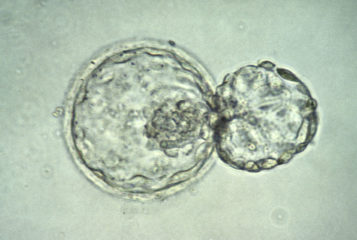
With the recent successful creation of an egg from a male mouse, Dr Marcin Smietana discusses how in vitro gametogenesis may have potential for LGBTQ+ parents in the future…