

Human stem cells edited to evade immune responses survived for five months in mice without triggering rejection.
In research aiming to understand and improve organ transplants, researchers at the University of Hong Kong (HKU) and the Lunenfeld-Tanenbaum Research Institute in Toronto, Canada, developed cells with an immune-cloaking design and a built-in genetic kill switch should they turn cancerous.
'This is a major step in realising the dream of having a potential universal, off-the-shelf product for cell therapy,' said Professor Danny Chan, from HKU's School of Biomedical Sciences and co-lead author of the study published in Stem Cell Reports. He added it 'could reshape treatment approaches for numerous diseases.'
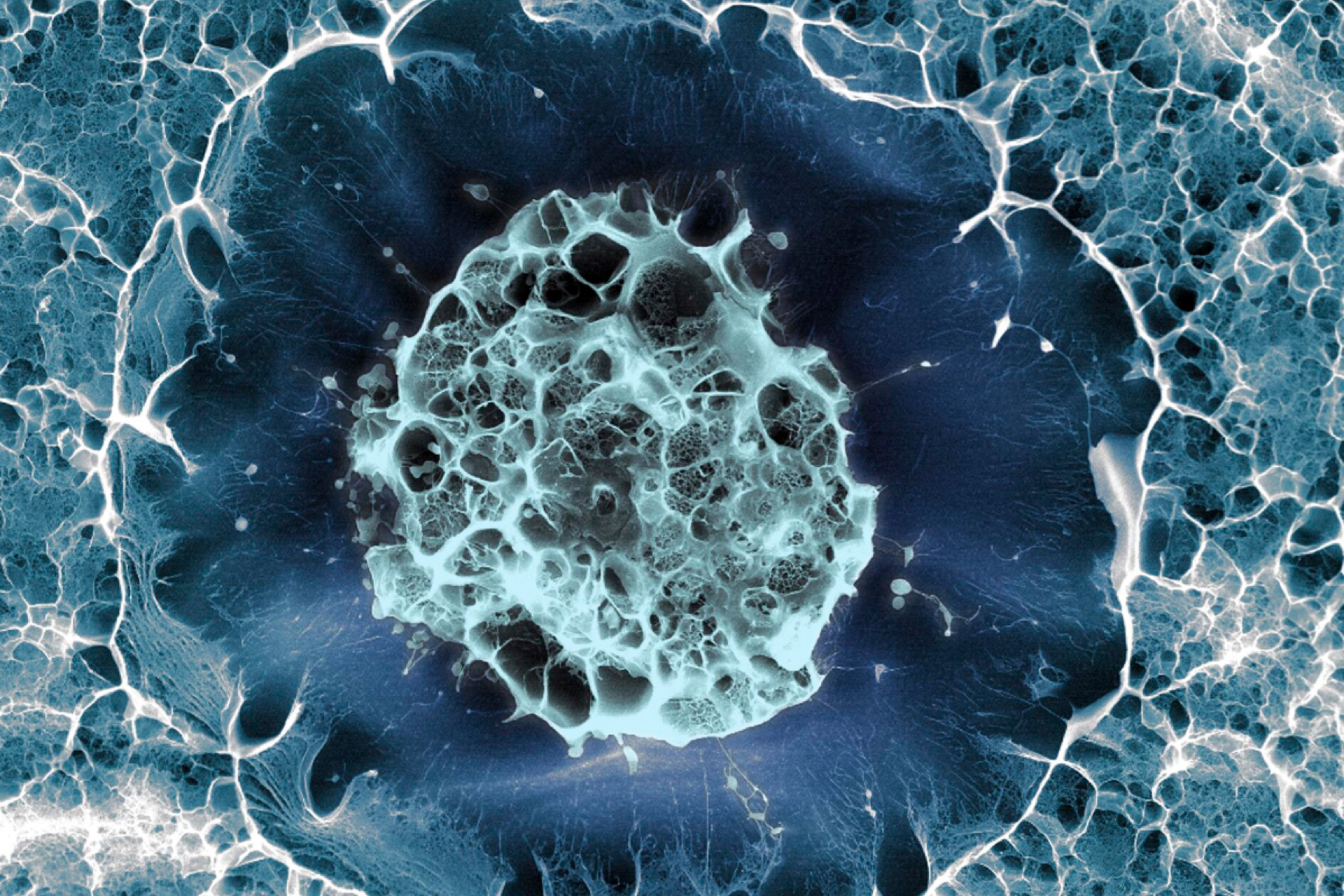
The team inserted eight immunosuppressive genes into a single line of human embryonic pluripotent stem cells – capable of differentiating into almost any tissue in the body – to create cells they call FailSafe-AlloAccept.
The immune-evasion strategy draws on three natural phenomena: transmissible cancers found in Tasmanian devils, which evade immune detection between genetically distinct animals; the human placenta, which is tolerated by the mother despite carrying foreign genetic material; and cancer cells that suppress immune activity locally. Combining these strategies, the engineered cells both hide from immune surveillance and dampen nearby immune responses.
When tested in mice carrying a functional human immune system, unmodified stem cells were rapidly destroyed, while the engineered cells formed viable tissue grafts that persisted throughout the five-month experiment.
A key concern with immune-evasive therapies is that cloaking properties could enable unchecked cell growth. The team addressed this with the 'SafeCell' mechanism: an additional gene rendering transplanted cells sensitive to a standard drug, allowing selective elimination if unwanted growth occurs. Transplanted mice also retained full immunological competence, continuing to reject ordinary foreign cells normally.
'The growth of immune-evasive cells could be halted by administering a common drug as a built-in kill switch,' said Professor Andras Nagy, from the Lunenfeld-Tanenbaum Research Institute and visiting professor at HKU.
Immune rejection remains a central obstacle in stem cell medicine, which has potential applications in treating Parkinson's disease, type 1 diabetes, and multiple sclerosis (see BioNews 1258, 1295 and 1218 respectively). Organ transplant patients currently need lifelong immunosuppressive drugs, raising the risk of infection and certain cancers. The authors hope that their approach could, in principle, eliminate that need while providing a standardised cell product usable regardless of a patient's tissue type.
The findings remain at an early preclinical stage, and the model has its limits: humanised mice do not fully replicate human immune complexity, and comparable immune-evasive cell lines have failed in other mouse models despite initial promise. The authors acknowledge that manufacturing at scale, rigorous safety profiling, and regulatory approval must all be addressed before any clinical trial can begin.
Sources and References
-
HKUMed demonstrates that 'cloaked' and safe human stem cells work, paving the way for off-the-shelf transplants without immune rejection
-
Genome-edited safe and immune-evasive human pluripotent cells: Potential solution for allogeneic therapies
-
Universal donor stem cells evade immune rejection with genetic cloak
Related Articles

In utero stem cell therapy for spina bifida found safe in early trial
The use of stem cell patches to treat fetuses with spina bifida has been shown to be safe following a phase 1 clinical trial...
Stem cell therapy reverses stroke damage in mice
Recovery was observed in mice receiving a stem cell transplant post-stroke, according to new research...
Type 1 diabetes patients no longer insulin-dependent after stem cell therapy
Ten out of 12 patients no longer require insulin treatment for type 1 diabetes one year after receiving stem cell-derived pancreatic islet cells...
Stem cell therapy success in early trial to treat Parkinson's disease
A stem cell-based therapy for Parkinson's disease entered higher dose clinical testing after a positive initial safety evaluation...
Stem cell therapy trial for MS shows promising results
Injecting stem cells into the brains of patients with multiple sclerosis is safe and may stop the disease causing further damage, according to an early-stage clinical trial...