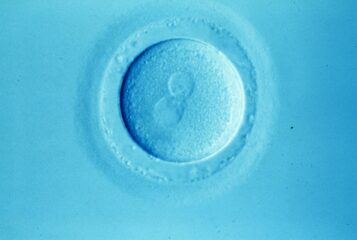


From nuclear bombs to nuclear genomes
Professor of stem cell science, Dusko Ilic, discusses concerns raised by the plans of a US-based startup – the (new) Manhattan Project – to create genome-edited babies…
Professor of Stem Cell Science
Professor Dusko Ilic holds the position of professor of stem cell science at King's College London. His focus are the translational aspects of human reproduction, stem cell research, and the development of sustainable technologies. Previously, he was director of research and development at StemLifeLine Sciences, adjunct associate professor at the University of California in San Francisco, and a consultant at the San Francisco Veteran Affairs Medical Centre. He originally studied molecular biology and obtained his medical doctorate at the University of Belgrade, Serbia, and went on to obtain a PhD at the University of Tokyo, Japan.
Professor of stem cell science, Dusko Ilic, discusses concerns raised by the plans of a US-based startup – the (new) Manhattan Project – to create genome-edited babies…
by Professor Dusko Ilic and 5 others
This open letter to the UK fertility regulator has been written by fertility professionals at Guy's & St Thomas' NHS Foundation Trust, King's College London and the University of Southampton...
A dystopian or utopian future? It's 2042, and Arin Korvix is attending a job interview – which includes the use of a cutting-edge AI system to predict his future health status with startling accuracy...
The meticulous scrutiny of the efficacy and cost-effectiveness of medical treatments and procedure by NICE is put into question by Professor Dusko Ilic when comparing the use of cryopreserved ovarian tissue and testicular tissue for restoration of fertility...
Are mesenchymal stem cells the new theriac of old, a medical concoction originally made by Greeks that was thought to cure all illnesses?...
Back in 18th century, British physician Dr Edward Jenner tested his hypothesis that harmless cowpox can prevent deadly smallpox disease on a young boy in exchange for a few coins to his poor parents. In 2018, a Chinese researcher Dr He Jiankui tested geno
Almost a century ago, Professor Hans Spemann, a German biologist from the University of Freiburg, and his PhD student Hilde Mangold defined a group of cells in newt embryos that triggered development of the central nervous system...
Recent debate over the safety of CRISPR-Cas9 genome editing following a study that suggested it can cause hundreds of unexpected mutations left me puzzled...
The regulatory mechanisms governing organ development are, in general, poorly defined. To recreate the complex processes involved in organ growth and maturation, scientists have started fiddling with three-dimensional (3D) cell culture...
A match of mitochondrial and nuclear genomes apparently affects healthy ageing in mice. But key questions need to be answered before stirring up implications for human mitochondrial replacement therapies...
Subscribe for free to what PET does best – informing you of the latest in fertility, genomics and embryo research.