


In this Human Developmental Biological Initiative (HDBI) ethics seminar, Professor John Evans – co-director of the Institute for Practical Ethics at the University of California, San Diego – recounts research from his latest book investigating the US public's opinion on the use of human brain organoids and human-animal chimaeras in research.
When I first told my family and friends that my PhD research would involve human brain organoids, they were equal parts intrigued, excited and disgusted by the thought of these 'mini brains' floating around in dishes in my lab. Having studied neuroscience, these concepts seemed normal to me, but their reaction made me consider how people who do not spend their time in a lab might not be so unperturbed by these relatively new advances in brain modelling.
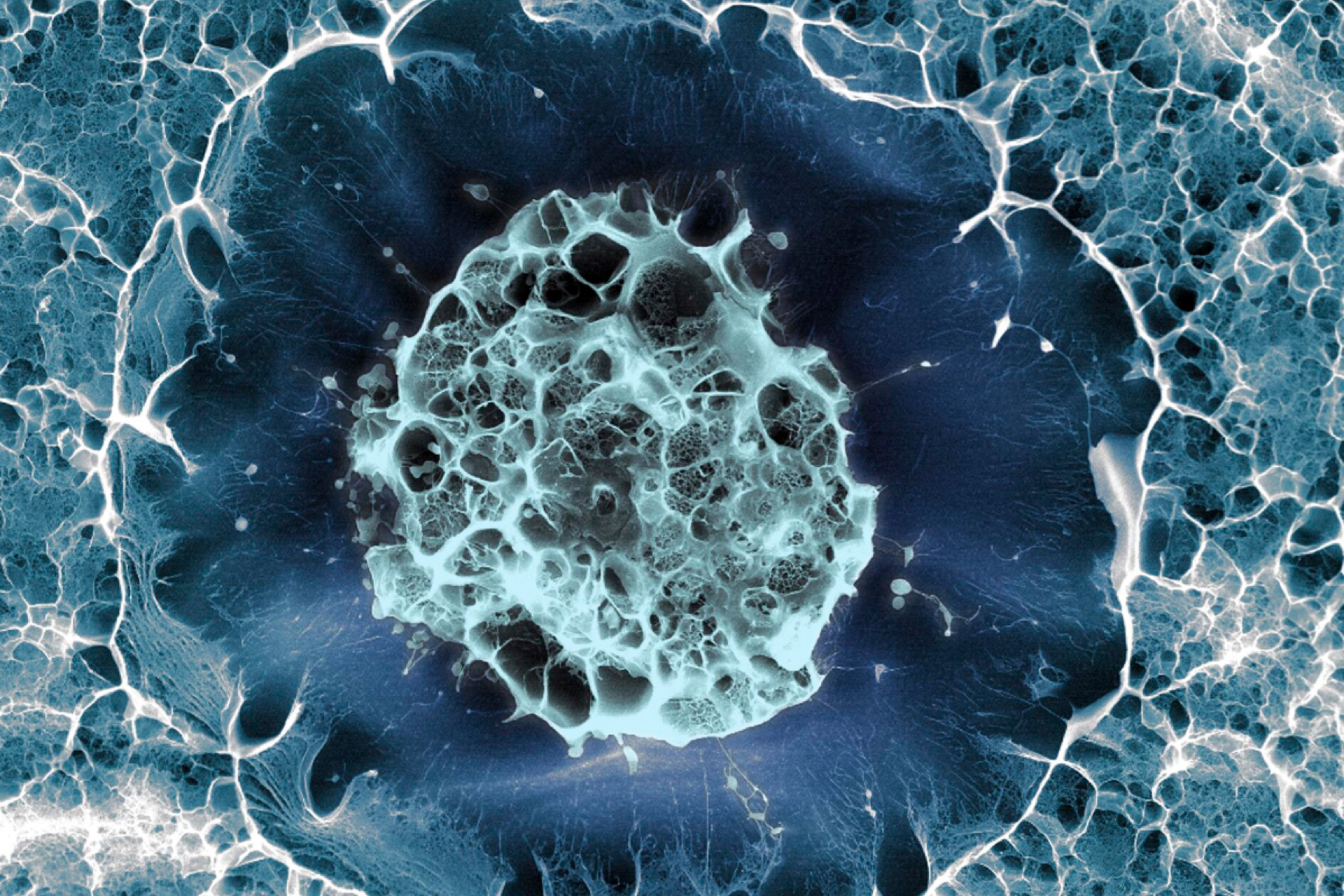
Brain organoids are a group of cells grown in the lab that resemble parts of the human brain, enabling scientists to model diseases in a dish to help get a better understanding of the underlying mechanisms with the ultimate goal of finding treatments, which to me personally sounds very positive. However, listening to Professor Evans' seminar, I became more aware of how the views of the public might not be so straight forward on this topic.
The HDBI aims to host seminars where they table discussions about potentially contentious topics in the field of stem cell and developmental biology research. Professor Evans begins his talk by giving a brief overview of why brain organoids and chimaeras are used in neuroscience research.
'In one of my favourite lines of all time, it's a great time to be a mouse with Alzheimer's disease, [meaning] all these spectacular treatments that work really well in mice… don't necessarily work very well when you try to apply them to humans,' Professor Evans explained. 'Yet you can't really experiment on live human brains. So, what do you do? You create these substitutes.'
Professor Evans does not dwell on the intricacies of techniques used to generate these models, recognising well that the seminar attendees are primarily listening to hear about the ethics of these models. He starts off by raising an important point asking, 'whose ethics should determine what research occurs?' and points out that the views of scientists or even professional bioethicists may differ significantly from the public on these topics.
This rhetorical question sets Professor Evans up nicely to talk about his research where he investigates the general public's views on the use of human brain organoids and human-animal chimaeras, where these human brain organoids are implanted into the brains of animals such as mice. He gives an in-depth overview of the methods he used and wraps up this section with the overarching conclusion that there is strong support for human brain organoids, while far more people disagree with creation of human-animal chimaeras in the USA.
One caveat that I think it is important to mention is that the research discussed, despite attempting to get views of those from a range of religious and educational backgrounds, lacks opinions from a culturally diverse group of individuals and is very US-centric. The impact of this research and the subsequent ethical debate would be greatly improved if a more diverse set of participants was included.
Next up, Professor Evans discusses the topics of consent, consciousness, chimaeras 'becoming human', 'ephemeral connections to disembodied human parts' and violations of the distinction between humans and animals, all in quick succession. I must admit at times I felt like the narrative jumped around a bit, no doubt due to the time constraints Professor Evans faced while attempting to squeeze in as much as he could into a short 40-minute seminar.
Nevertheless, I do not think this took away too much from the underlying message that Professor Evans was trying to make as he suggests that the public has varying and complex views on the use of organoids and chimaeras.
One finding from his study that I found particularly interesting was many people agreed that if the organoids could think they might have similar thoughts to those of the person who donated the skin cells and that they should be seen as an extension of that person. Additionally, this led to questions about whether the organoids should be destroyed or not, which is something I must admit that I have never even considered.
For me personally, as a scientist working with organoids daily, it made me step away from the nitty-gritty of day-to-day of my work in the lab and think about the wider perspective of the ethics of such technologies. The seminar serves as a successful teaser for his book 'Disembodied Brains: Understanding Our Intuitions on Neuro Chimeras and Human-Brain Organoids', which will be going on my 'to-read' list.
This discussion undoubtedly leaves scientists with food for thought, especially as this field is developing faster than ever before and new advanced models being established year-on-year. I would encourage anyone who works in the field of biology and especially those working with organoids and chimaeras, to give it a listen, even if it is just to get a taster into the fascinating world of bioethics.
Professor Evans leave us with his final thoughts saying 'I think we need to be aware of the reasons for the public's ethical concern so that research can advance in a way that's most consistent with the public's ethics that is both more democratic and will ultimately result, in my opinion, in more trust in science.'
Sources and References
Related Articles


Human brain organoids kept for more than five years in a dish
Human brain organoids have been kept in culture for more than five years, extending the period over which these models of human brain development have previously been maintained...
Book Review: Disembodied Brains – Understanding our intuitions on neuro-chimaeras and human brain organoids
Professor John Evans explores public and expert views on human brain organoids and neural chimaeras. He highlights the tension between scientific promise and public unease, providing an essential guide for anyone working with these emerging technologies...

Event Review: HDBI Ethics Seminar – Ethics oversight in developmental biology research
Speakers highlighted the need for interdisciplinary dialogue between ethicists and researchers when considering ethical research involving stem cell-based-embryo models...
Whole-brain organoid mimics brain of 40-day-old fetus
Organoids comprising brain and blood vessel cells have been generated from human pluripotent stem cells, yielding a composition of different cell types similar to that of a 40-day-old fetus...
Mice, pigs and humans: chimaera research at the ISSCR conference
Novel types of chimaeric pig embryos and chimaeric mice, containing both human and animal cells, have been reported at an international conference...
Chimeric brain organoid created using stem cells from five people
Stem cell lines from multiple human donors have been combined to create 3D brain organoids for the first time...
Event Review: HDBI Ethics Seminar – Embryo and fetal tissue research
Developing guidelines for research using fetal tissues in Japan, and 'the argument of potential' as an ethical consideration for embryos and integrated embryo models are discussed in this Human Developmental Biology Initiative ethics seminar...