


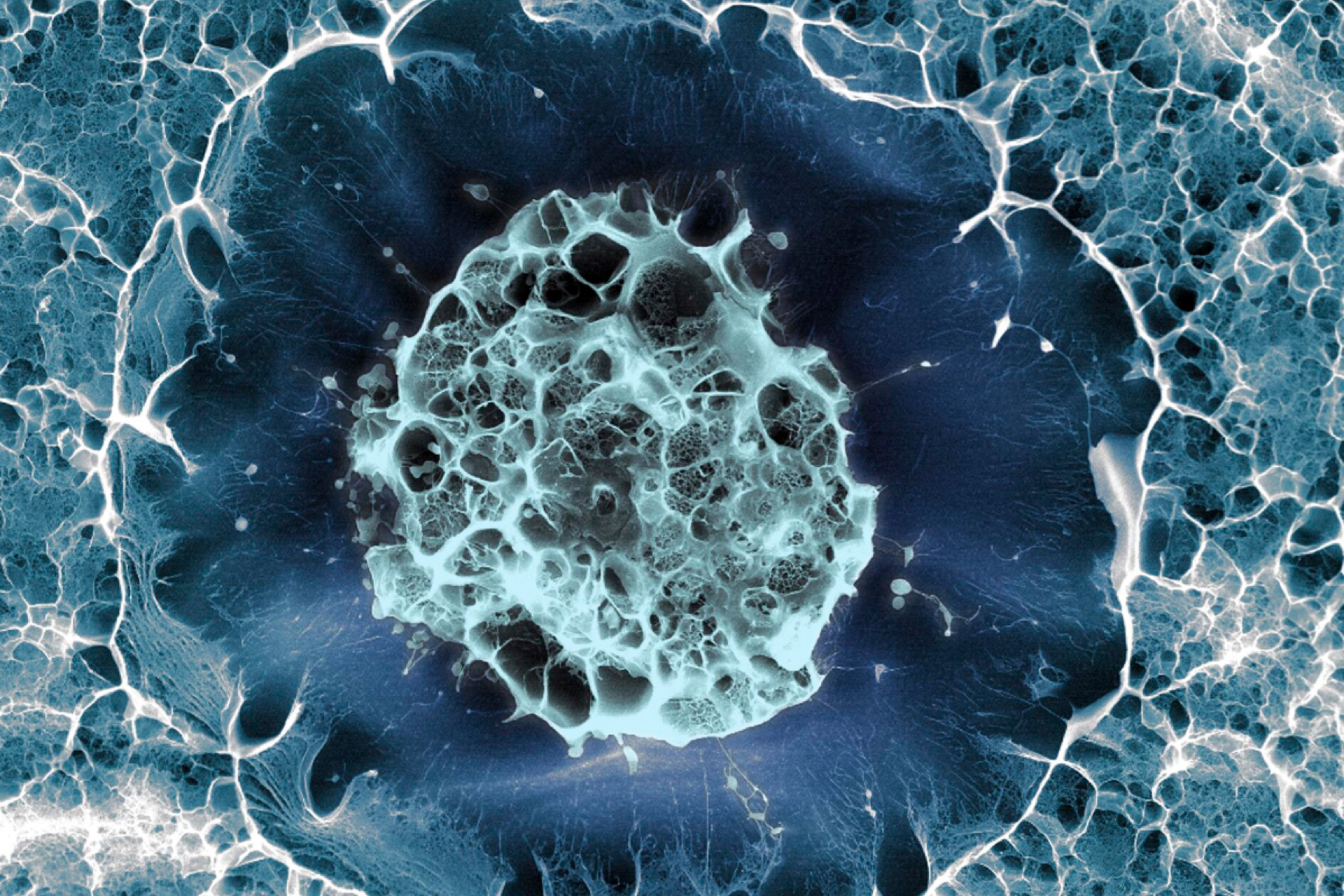
The first 'lung-on-chip' model consisting solely of genetically identical cells derived from a single person can mimic breathing and simulate lung disease in an individual.
Lung-on-a-chip models represent a promising alternative to animal studies to study lung processes. These models, however, have traditionally been made of a mixture of patient-derived and commercially available cells, which are unable to replicate lung function or disease progression of a single individual. In a study published in Science Advances, researchers from the Francis Crick Institute and biotechnology company AlveoliX have developed the first human lung-on-a-chip model using stem cells taken from a single human donor to understand the early stages of tuberculosis (TB) infection.
'Tuberculosis is a slow-moving disease, with months between infection and the development of symptoms, so there's an increasing need to understand what's happening in the unseen early stages,' said Dr Jakson Luk, postdoctoral fellow at the Crick Institute and first author of the study. 'We were successfully able to mimic these initial events in TB progression, giving a holistic picture of how different lung cells respond to infections.'
The researchers used human induced pluripotent stem cells to produce two types of alveolar epithelial cells. These were then grown on top of a very thin membrane in a device manufactured by AlveoliX, while vascular endothelial cells – grown from the same cells – populated the bottom of the membrane. The result was an air sac barrier where both layers of cells developed on their own and were sourced from a single donor. The team even used a specialised machine designed by AlveoliX to imitate breathing.
The new lung-on-chip was then used as an early-infection model for TB. The scientists added immune cells produced from the stem cells of the original donor, before infecting them with the pathogen Mycobacterium tuberculosis. Five days after infection, the air sac barriers collapsed, allowing the researchers to identify an essential gene in keeping the immune system intact.
As well as broadening knowledge of the mechanisms of TB infection, the study presents a viable human lung model that bypasses some of the shortcomings of existing technologies and could therefore prove valuable in studying lung diseases and therapies.
'The chip supports the big push into personalised medicine,' said Dr Max Gutierrez, principal group leader of the Host-Pathogen Interactions in Tuberculosis Laboratory at the Crick Institute and corresponding author of the study. 'It could help us understand the impact of genetics on whether a treatment is effective or not.'
The team is now looking at refining the chip by incorporating other important cell types.
Sources and References
-
Built to breathe: mini 'lungs' recreate individual response to infection
-
Autologous human iPSC–derived alveolus-on-chip reveals early pathological events of Mycobacterium tuberculosis infection
-
First human 'lung-on-chip' model developed using stem cells from a single donor
-
Breathing lung-on-a-chip from one human donor advances personalised medicine
-
Single-donor 'lung-on-chip' breathes new life into disease modeling and personalised medicine
Related Articles
Researchers grow mini human lungs to imitate COVID-19 infection
The first human 'lung-in-a-dish' model, known as a lung organoid, representing all lung cell types and allowing replication of SARS-CoV-2 infection has been produced...
Lung stem cell organoids developed to study COVID-19
Two teams of researchers have successfully grown 3D lung models to study the progression of COVID-19...
Studying SARS-CoV-2 using human lung organoids
Scientists from Stanford University, California, USA have developed a new model system to better study the lung damage that occurs during COVID-19...