

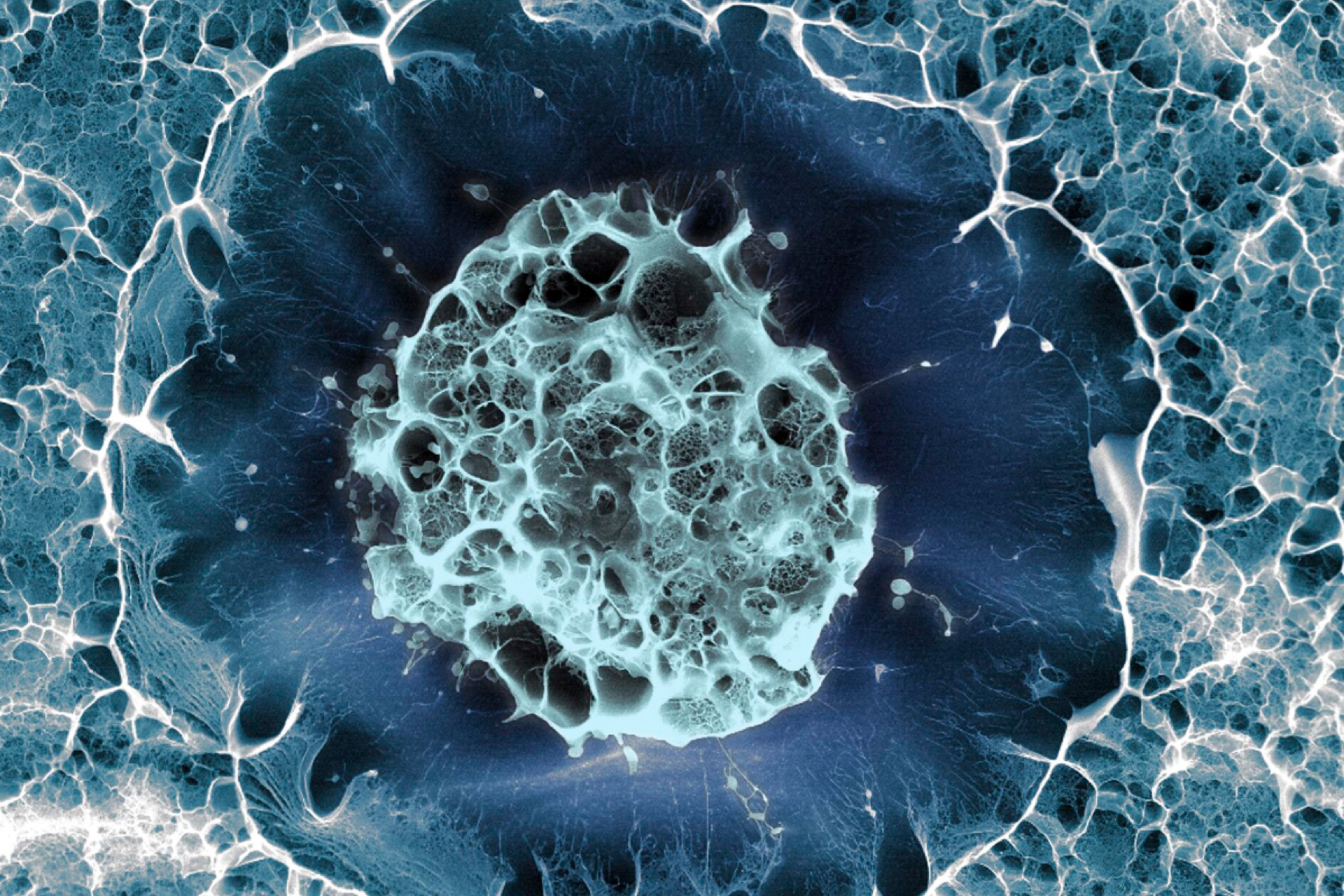
Human salivary gland organoids derived from pluripotent stem cells have been transplanted into mice.
Pluripotent stem cells have the potential to develop into many different cell types and can be used to generate mini versions of organs, known as organoids. Using step-by-step differentiation of human induced pluripotent stem (iPS) cells, researchers at the University of Buffalo, New York, and the University of Missouri produced salivary gland epithelial progenitor cells. These cells were able to assemble into three-dimensional (3D) salivary gland organoids which were then transplanted into the salivary glands of immunodeficient mice.
'Our experiments so far showed that the transplanted organoids have the potential to survive in vivo. They integrated with the gland of the mouse and differentiated to include major salivary gland structures,' explained Laura Sherwood, a first author of the paper published in Nature Communications and PhD candidate in biomedical engineering at the University of Buffalo, New York.
By exposing iPS cells to specific chemicals and transcription factors with precise timing based on studies of human development, researchers can guide stem cells to differentiate into given cell types. In this study, iPS cells were first guided to become salivary gland epithelial progenitor cells, which were then used to generate 3D organoids with defined lumens and secretory function. The organoids were then transplanted into immunodeficient mice, where the cells survived, integrated into the existing salivary gland tissue and differentiated into various salivary gland cell types, including acinar, ductal and myoepithelial cells.
'While using these cells in humans is a long way off, this research does suggest that one day scientists could repair salivary glands damaged by radiation therapy, restore saliva production in people with chronic dry mouth, study diseases of the salivary glands in the lab and test potential new drugs on human salivary tissue,' said Professor Stelios Andreadis from the department of chemical and biological engineering at the University of Buffalo, one of the principal investigators of the study.
Damage to the salivary glands, such as by radiation treatments or autoimmune conditions including Sjögren's disease, can cause severe dry mouth that affects speaking, swallowing and eating. Current treatment options for salivary gland dysfunction are limited and can have undesirable side effects. Organoids could be used for research into salivary gland development and disease progression, as a tool for drug screening, or potentially to replace damaged salivary gland tissue.
The salivary gland organoids generated in this study provide an improved model for studying development and disease. However, significant additional research is needed before replacement therapy in humans could be considered, in particular to refine cell differentiation and maturation processes. In future work, the research group aims to determine which stage of organoid development would be best for transplantation. How to improve saliva production and better connect transplanted organoids with existing salivary gland ducts and nerves will also be of interest.
Sources and References
Related Articles

Human brain tissue grows and connects inside engineered mice
Human organoids transplanted into mouse brains can grow and form connections with the surrounding nervous system...
Brain organoids could guide treatment of Alzheimer's disease
Brain organoids, and the tiny particles they secrete, may help to stage early Alzheimer's disease and evaluate drug response...
Kidney organoids could help reduce gene therapy side effects
Side effects of viral-delivered gene therapies have been elucidated using human stem-cell derived kidney organoids...
Whole-brain organoid mimics brain of 40-day-old fetus
Organoids comprising brain and blood vessel cells have been generated from human pluripotent stem cells, yielding a composition of different cell types similar to that of a 40-day-old fetus...
Blood vessel organoids support blood flow and tissue healing
Blood vessels grown in the lab in five days helped to restore blood flow and reduce tissue damage in mice...