

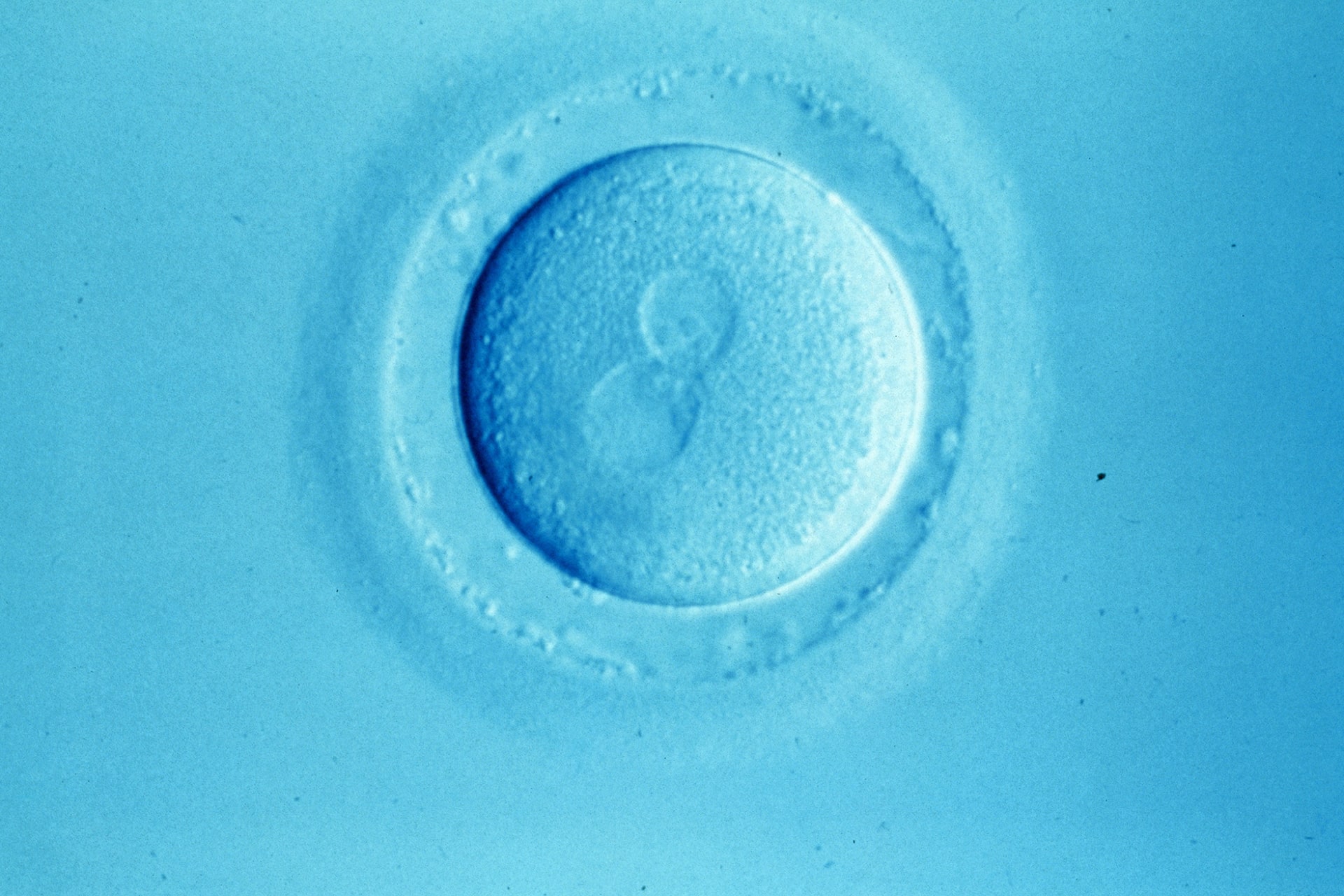
Enzymes help sperm boost energy production at the right time to swim towards and fertilise an egg, according to new research.
Researchers from Michigan State University, East Lansing, used mouse sperm to identify the main metabolic mechanisms that allow sperm to transition from a resting state in the testes to rapidly become mobile after ejaculation. They discovered that aldolase, one of the enzymes involved in glycolysis, is an important player in sperm activation. Glycolysis is a metabolic process that breaks down the sugar glucose to produce energy within cells.
'Sperm metabolism is special since it's only focused on generating more energy to achieve a single goal: fertilisation,' said Dr Melanie Balbach, senior author of the study published in the Proceedings of the National Academy of Sciences.
To study sperm activation, the authors used stable isotope analysis, a method that allows them to track the glucose molecules consumed and produced during metabolism. They used these methods to compare sperm at rest with sperm that had been activated.
'You can think of this approach like painting the roof of a car bright pink and then following that car through traffic using a drone,' explained Dr Balbach. 'In activated sperm, we saw this painted car moving much faster through traffic while preferring a distinct route and could even see what intersections the car tended to get stuck at.'
The researchers examined the proportions of the different enzymes involved in the control of the flow of glucose and found that during sperm activation, glycolysis is increased at the expense of other metabolic pathways. They were able to identify the different mechanisms involved in sperm metabolism, in different areas of the cell, and that these differ depending on the presence or absence of mitochondria.
The researchers hope that the findings can improve understanding and diagnosis of male infertility, and pave the way for future treatments.
'Better understanding the metabolism of glucose during sperm activation was an important first step, and now we're aiming to understand how our findings translate to other species, like human sperm,' said Dr Balbach. 'One option is to explore if one of our 'traffic-control' enzymes could be safely targeted as a nonhormonal male or female contraceptive'.
Sources and References
Related Articles

CRISPR sheds light on genes essential for sperm production in mice
CRISPR/Cas9 genome editing has been used in mice to investigate two key genes' roles in male fertility and sperm production...
Gene essential for producing functional sperm explored
Disruption to a gene causes malformations to the development of sperm tails, resulting in mice producing no functional sperm...
Temperature controls mechanism in sperm linked to male fertility
The mobility of sperm appears to be temperature-dependent due to the action of a single protein, according to research carried out in mice...
Sperm change swimming patterns to find egg
Research has shed light on how the chemical environment of the fallopian tubes can influence how mammalian sperm swim towards the egg...

What's in the Pipeline for Male Infertility?
A historic lack of investment in targeted treatments means that male infertility hasn't received the airtime that's needed to raise awareness, open up the conversation, or provide therapeutic options that focus on the cause...
Research finds sperm's 'on' switch
Researchers have discovered a receptor on the cell membrane of sperm that is vital for their activation...
Adding missing protein 'kick-starts' infertile sperm in lab tests
Adding a missing protein to infertile human sperm gives the sperm the ability to successfully fertilize an egg, a lab-based study reports...