

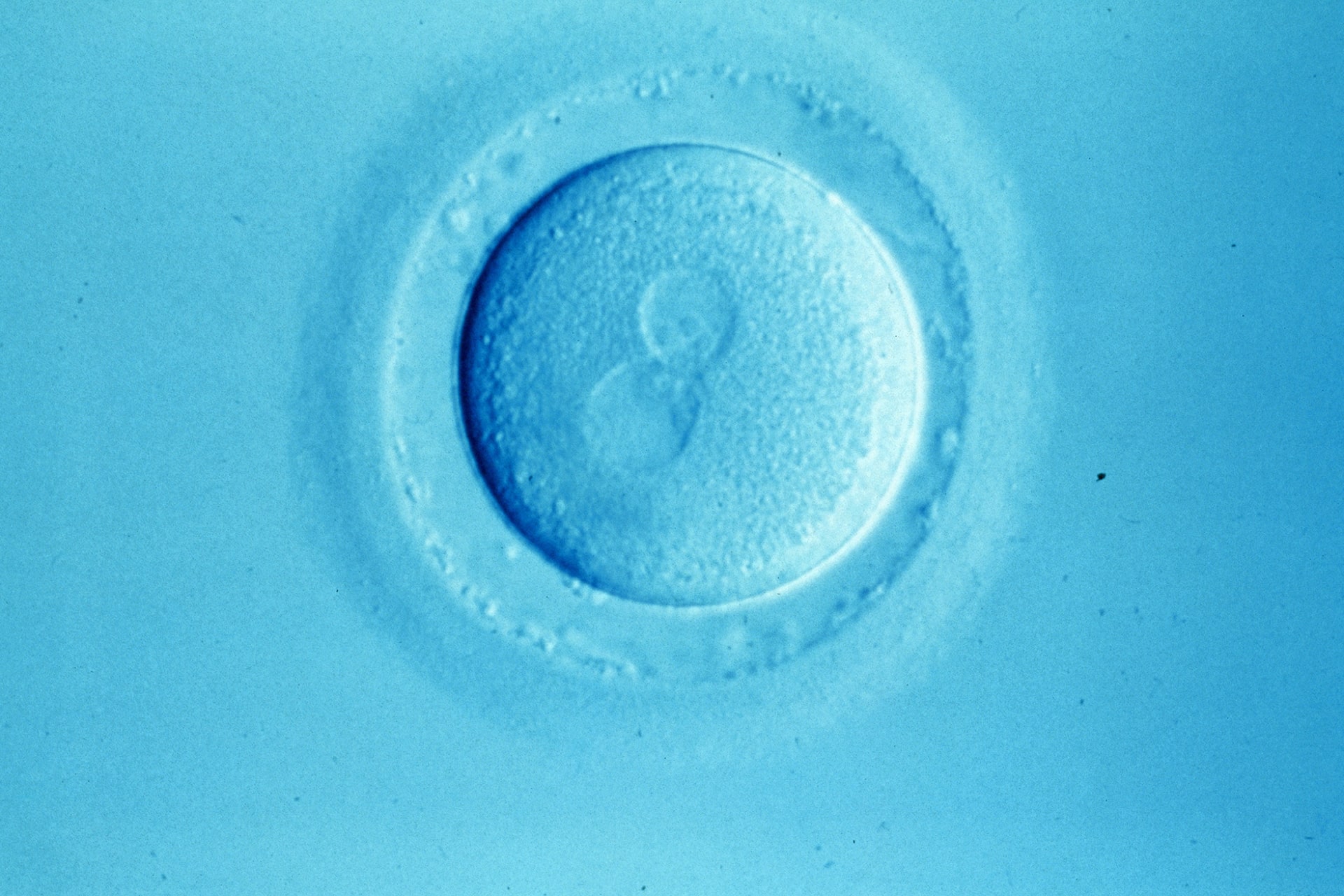
A newly discovered complex formed from cohesin and proteins is essential in the production of sperm.
Researchers from Kyoto University, Japan, have discovered STAG3-cohesin, an essential protein complex responsible for the development of sperm-producing stem cells. STAG3 is a protein involved in organising the DNA architecture of spermatogonial stem cells, and was previously thought to function only during meiosis, the process of sexual cell replication. New research has now shown that the STAG3 protein forms complexes with cohesins during mitosis to specify the folding of DNA in spermatogonial stem cells, a process which is essential to the proper production of new sperm cells.
'Here we show that STAG3, so far known to exclusively form meiotic cohesins, generates a mitotic cohesin for male germline nucleome programming [the 3D organisation of the genome inside the nucleus] in mice', wrote the authors of the paper published in Nature Structural & Molecular Biology.
The researchers found that stem cells failed to differentiate into sperm cells when STAG3 was absent. These findings, identified in cell lines from mouse models, build upon the understanding of the genetic processes required for the correct specification of spermatogonial stem cells.
To understand the role of STAG3, the researchers compared cell differentiation in stem cells where STAG3 was inhibited to those where only STAG3 functioned and STAG1 and STAG2 – two other proteins known to be important for cell differentiation – were inhibited. Stem cells with STAG3 'knocked out' were unable to progress to the next stage of cell differentiation required for sperm development. By studying the protein-protein interactions and protein complexes inside the cells, the researchers confirmed that STAG3 failed to form a cohesion complex in these cells, confirming that binding of the STAG3-cohesin complex is essential to sperm production in mice.
Analysis of large human genomic datasets showed that STAG3 is highly expressed in B-cell lymphoma cells, indicating a potential role for STAG3 in the treatment of blood cancers. The researchers investigated function in these cells by inhibiting STAG3, which led to a slowed rate of cell growth.
Having characterised the crucial role of STAG3-cohesin complexes in sperm production and the potential link to B-cell lymphomas, this research progresses the understanding of infertility and blood cancers in humans, enabling further research into treatments for these conditions.
The authors conclude: 'Our findings on mitotic STAG3-cohesin elucidate a principle of male germline nucleome programming, demonstrate an unexpected mitotic role for STAG3 and might potentially improve understanding of human malignancies'.
It is important to note that these results were based on mouse models and lymphoma human cell lines, and further research is needed to understand the effects of STAG3 inhibition in humans.
Sources and References
Related Articles

CRISPR sheds light on genes essential for sperm production in mice
CRISPR/Cas9 genome editing has been used in mice to investigate two key genes' roles in male fertility and sperm production...
Gene essential for producing functional sperm explored
Disruption to a gene causes malformations to the development of sperm tails, resulting in mice producing no functional sperm...


Light shed on sperm DNA packing process
Crucial role of sperm DNA-packaging protein has been identified in mice, which causes infertility when truncated...
Functional sperm developed from mouse pluripotent stem cells
Researchers in Japan have successfully demonstrated the development of functional sperm cells that developed into fertile offspring from pluripotent embryonic stem cells, in mice...
Gene responsible for lack of sperm identified
Gene variants affecting a single gene have been identified in men who do not produce sperm, giving some insight into genetic control of sperm production...
Human sperm maturation study may hold insights
Researchers hope that a study detailing the four stages of human sperm stem cell development may shed light on infertility and certain cancers...