

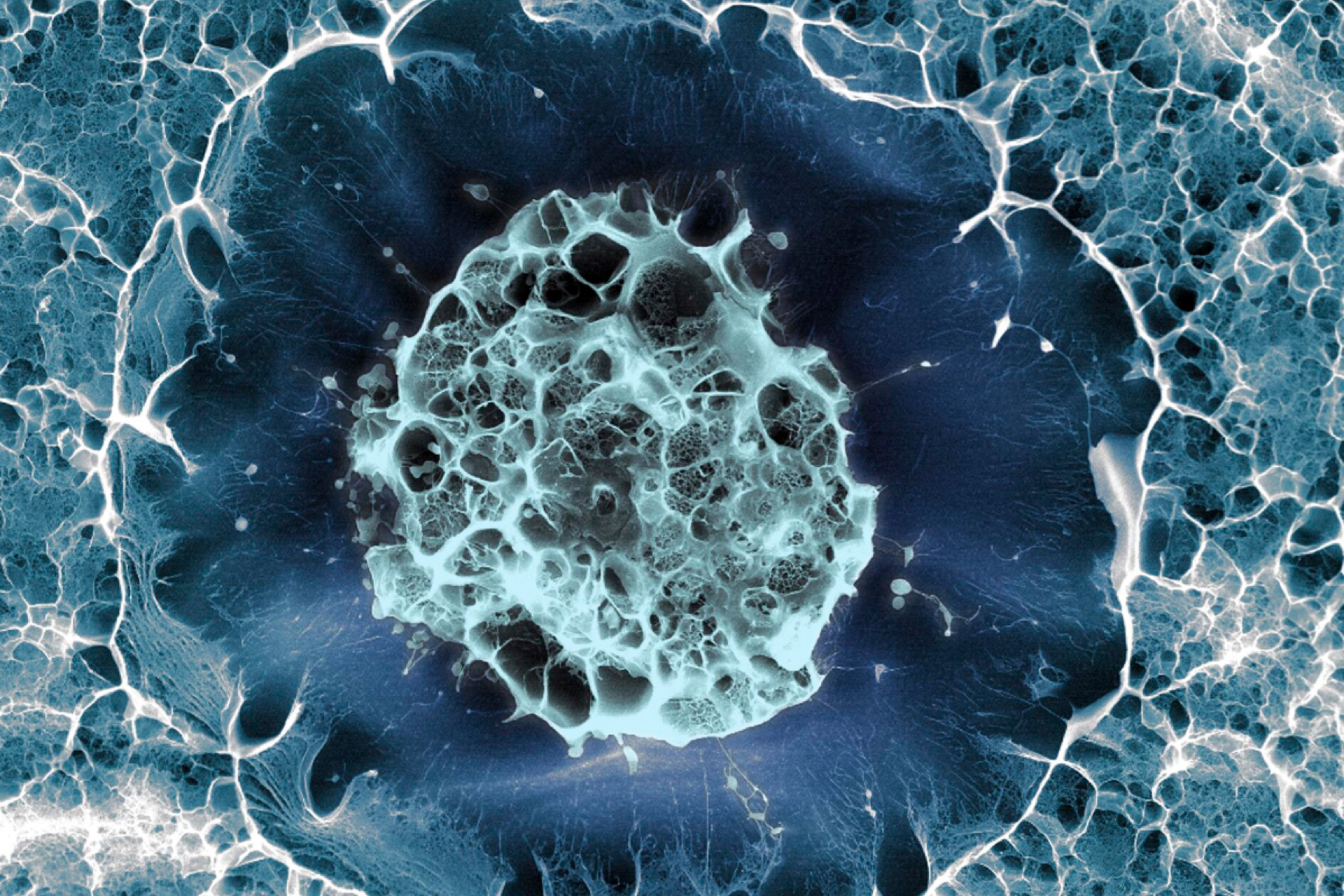
Transplanting neural stem/progenitor cells into people with recent spinal cord injuries has provided early evidence that the approach can be delivered safely, according to a first-in-human study published in Nature Medicine.
Researchers from Keio University, Tokyo, Japan, transplanted induced pluripotent stem cell (iPSC)-derived neural stem/progenitor cells into the spinal cords of four men with subacute spinal cord injuries (see BioNews 1283). Subacute injuries occur in the weeks to months following the initial trauma. The first-in-human study primarily evaluated safety, following participants for up to four years after treatment. The researchers reported that the primary safety objective was met, with no serious adverse events related to transplantation. They also observed improvements in motor function in some participants during follow-up.
'This study provides first-in-human evidence that transplantation of human iPSC-[neural stem/progenitor cells] into the injured human spinal cord is clinically feasible and can be performed with an acceptable safety profile,' the authors wrote in the paper.
iPSCs are created by reprogramming adult cells back into a more flexible state, allowing them to develop into different cell types. The researchers used these cells to produce neural stem/progenitor cells, which can mature into neurons and glial cells that support the function of the nervous system. Researchers hope these cells may help support damaged spinal cord pathways, although the mechanisms behind any functional improvements remain under investigation.
Spinal cord injuries can result in permanent loss of movement and sensation because damaged nerve pathways have limited ability to regenerate. Current treatments focus mainly on rehabilitation and managing complications, creating interest in regenerative approaches that could restore or support damaged neural circuits.
Although the study was designed primarily to assess safety rather than effectiveness, researchers also measured changes in neurological function using the American Spinal Injury Association Impairment Scale (AIS). All four participants entered the trial with AIS grade A, indicating a complete spinal cord injury with no motor or sensory function below the level of the injury. After one year, two participants remained at grade A, while one improved to grade C and another to grade D, indicating recovery of voluntary motor function below the level of injury. Improvements in motor scores were also reported in some participants.
Separately, Professor Hideyuki Okano of Keio University and colleagues presented related research at the International Society for Stem Cell Research 2026 Annual Meeting, exploring how the broader iPSC-derived cell therapy programme could be adapted for people with chronic spinal cord injury. Unlike subacute injuries, chronic injuries involve long-established changes within the spinal cord environment that can make recovery more difficult.
The researchers reported preclinical findings supporting further development of the approach and are preparing for future clinical evaluation, although trials in people with chronic spinal cord injury have not yet begun.
'We have already successfully completed a world-first, first-in-human clinical study targeting patients in the subacute phase, which demonstrated a promising safety profile,' said Professor Okano. 'Our shift to the chronic phase is the next logical milestone, built upon that solid foundation.'
Sources and References
-
An iPSC-derived neural progenitor cell therapy for subacute spinal cord injury: a phase 1 trial with long-term follow-up
-
Spinal cord injury stem cell transplant clears Phase I, improves motor scores
-
Stem cell strategy for chronic spinal cord injury advances
-
Stem cell therapy advances toward clinical trial for chronic spinal cord injury
Related Articles

Paralysed man able to stand after stem cell injection
Injecting neural stem cells into patients with spinal cord injuries may help improve their motor function...


Gene therapy dissolves scar tissue to heal rat spinal cord, reversing paralysis
A novel approach to gene therapy has restored limb control to rats paralysed after spinal cord injury, new research has found...
Human stem cells help paraplegic rats walk again
Paraplegic rats were able to walk after being treated with human stem cells. This is the first time lower body movement has been restored after an animal's spinal cord has been completely severed...