

Stem-cell-based embryo models (SCBEMs) are opening new possibilities in developmental biology, reproductive science and translational research, alongside important progress in ethics and governance.
As models become more complex and their uses expand, questions concerning their appropriate scientific justification and moral value – and related questions of consent, culture limits and public trust – are also evolving. No single discipline can answer these questions alone.
National approaches to this area also differ substantially, creating both opportunities for learning and challenges for international research. Together, these developments make a strong case for sustained dialogue and collaboration across disciplines and borders.
From Geneva to Leiden
In May 2025, a group of interdisciplinary SCBEM experts met at the Brocher Foundation in Geneva, Switzerland, to discuss the challenges. That three-day meeting led to a new network called EMERGE (Embryo Model Ethics, Research, Governance and Engagement). The Geneva discussions focused on articulating key problems. The next step was to identify shared priorities, and where EMERGE could contribute.
EMERGE met again as a larger group, for a five-day workshop in September 2026 at the Lorentz Centre in Leiden, the Netherlands. That workshop brought together 44 experts from diverse disciplinary and professional backgrounds, including biomedical and social scientists, ethicists, lawyers, regulators, philosophers and policymakers from Africa, Asia, Europe, North America and Oceania.
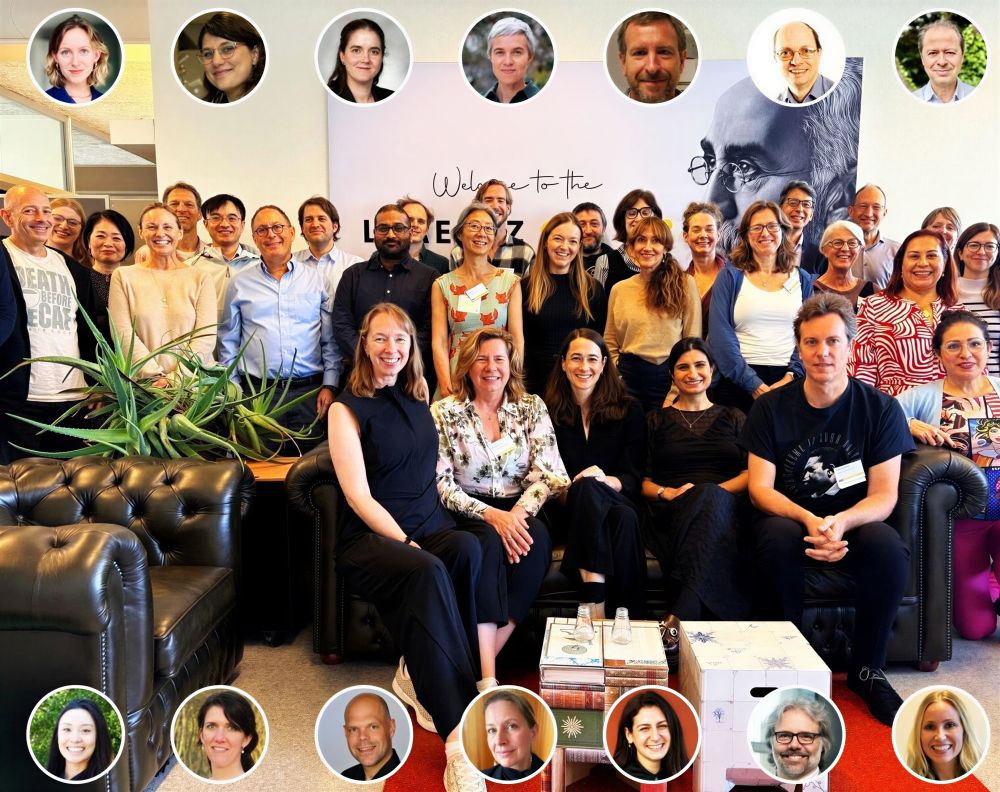
The workshop was financially supported by ZonMw and by the Science and Technology Policy programme at Rice University's Baker Institute, with substantial in-kind support from the Lorentz Centre. This enabled participation across a broad range of disciplines, jurisdictions, and career stages.
Five days at the Lorentz Centre
The Lorentz Centre workshop was designed to be highly participatory. There were short plenary talks and expert panels, but most of the work happened in small interdisciplinary breakout groups, priority-setting exercises, live rapporteur sessions and whole-group syntheses.
Each day had its own purpose. The first day mapped the scientific and governance landscape, while the second looked at moral, legal and developmental boundaries. The third day covered international and cross-border issues, including a session on the scientific, ethical and governance challenges that may lie ahead. On the fourth day, the focus moved from analysis to recommendations, public dialogue and plans for joint papers. The final day was used to agree on EMERGE's vision and mission, and to assign people to lead specific projects.
An important insight was that SCBEM research is moving from building and validating models toward using models in IVF research, toxicology, drug screening and tissue generation. Additionally, implantation models are becoming increasingly complex, while substantial experimental variability complicates claims about what a model can reliably do.
These advances raise important ethical and governance questions. If models are becoming more useful, more complex and less easily classified, should oversight become less concerned with labels and fixed time limits, and more concerned with function, developmental features, intended use and emergent capacities?
Advances in SCBEM research also raise questions about validation, consent, moral value, transplantation, public engagement, and how governance can remain proportionate and adaptive as the science changes. An important consideration is whether and how governance of biotechnology can address the field as a whole, rather than reacting to each new technology in turn.
EMERGE's vision and mission
On the final day, participants discussed the vision and mission of the network.
- EMERGE strives for a world in which SCBEM research responsibly advances health and knowledge.
- EMERGE aims to facilitate the trustworthy advancement of SCBEM research through global dialogue and interdisciplinary collaboration, promoting scientific excellence, robust ethical consideration, meaningful societal engagement and agile governance.
Our mission reflects a belief that ran through the whole week – the belief that scientific progress, ethical scrutiny, responsive governance and societal engagement are not in competition. All four are needed, if the field is to advance responsibly.
Next steps for the network
The workshop produced a concrete programme of work. Participants drafted a list of priorities to safeguard responsible SCBEM research, and identified what EMERGE can do to help. International and interdisciplinary subgroups will now write a series of papers on several of these priority questions.
The Leiden meeting also identified two practical next steps for the EMERGE network.
- EMERGE plans to facilitate a regulator network, to strengthen links between oversight bodies across jurisdictions and between regulators and researchers.
- EMERGE aims to create comparative 'regulation snapshots' – that is, overviews of how different countries govern research involving SCBEMs, to help stakeholders navigate cross-jurisdictional differences and identify areas of convergence.
Looking ahead
The field is moving quickly. Governance frameworks will need to be anticipatory, grounded in science, and ethically and socially informed.
EMERGE aims to provide a forum where questions raised by SCBEM research can be addressed together, across disciplines and borders. If you want to learn more, please visit our website. If you have questions or ideas for collaboration, please get in touch.
Written by Nienke de Graeff, Emma Cave, Megan Munsie, Martin Buck, Naomi Moris and Nicolas Rivron, on behalf of the EMERGE network.
Related Articles

How exactly do embryo models differ from natural human embryos?
A newly devised benchmark provides a measure of how closely different human stem-cell-based embryo models resemble early natural human embryos...

Embryo research and stem cells in France: What might change?
France will need to update its bioethics law by 2028. Adrien Bottacci explains what recent recommendations could mean for the 14-day limit on human embryo research, and for research involving stem-cell-based embryo models...
What are the morally relevant features of stem-cell-based embryo models?
Dr Naomi Moris and an international group of colleagues propose three broad categories of ethical value and five categories of morally relevant biological features that can inform oversight of research involving human stem-cell-based embryo models...
The Dutch Embryo Act at a crossroads
The Dutch Embryo Act has governed the handling of oocytes, sperm cells and embryos since 2002. However, the rapid emergence of stem-cell-based embryo models and scientific interest in early human development are now driving debate around multiple provisions of the Act...

Human embryonic stem cells remain indispensable for research and therapy
Professor Lorenz Studer and Tyler Lamb argue that existing ethical oversight enables responsible human embryonic stem cell research, and that continued NIH support is vital for regenerative medicine, disease modelling and new therapies...
Developing an international framework for stem-cell-based embryo models
Professor Alfonso Martínez Arias, Dr Nicolas Rivron and Dr Naomi Moris set out key recommendations from a foundational framework for research, technological development and regulation in relation to stem-cell-based embryo models...
Embryos implant in 3D womb lining models
Both natural human embryos and stem cell-based embryo models have been observed implanting in cultured models of the human endometrial lining...

Understanding human embryo implantation: A research breakthrough
Professor Robin Lovell-Badge – chair of trustees at PET – discusses three new studies exploring human embryo implantation, and argues that while the research represents an important breakthrough, it should not be misconstrued as a step toward ectogenesis...
ISSCR requires expanded oversight of embryo models, bans ectogenesis
The International Society for Stem Cell Research has expanded its oversight requirements for research involving human stem-cell-based embryo models, and has prohibited the use of such embryo models to achieve ectogenesis...
Human stem-cell-based embryo models: ethical and legal challenges
Professor Emma Cave argues that even if human stem-cell-based embryo models were to replicate embryos so accurately that they ceased to be 'models', there would still – even then – be good reasons to distinguish them from embryos for regulatory purposes…