


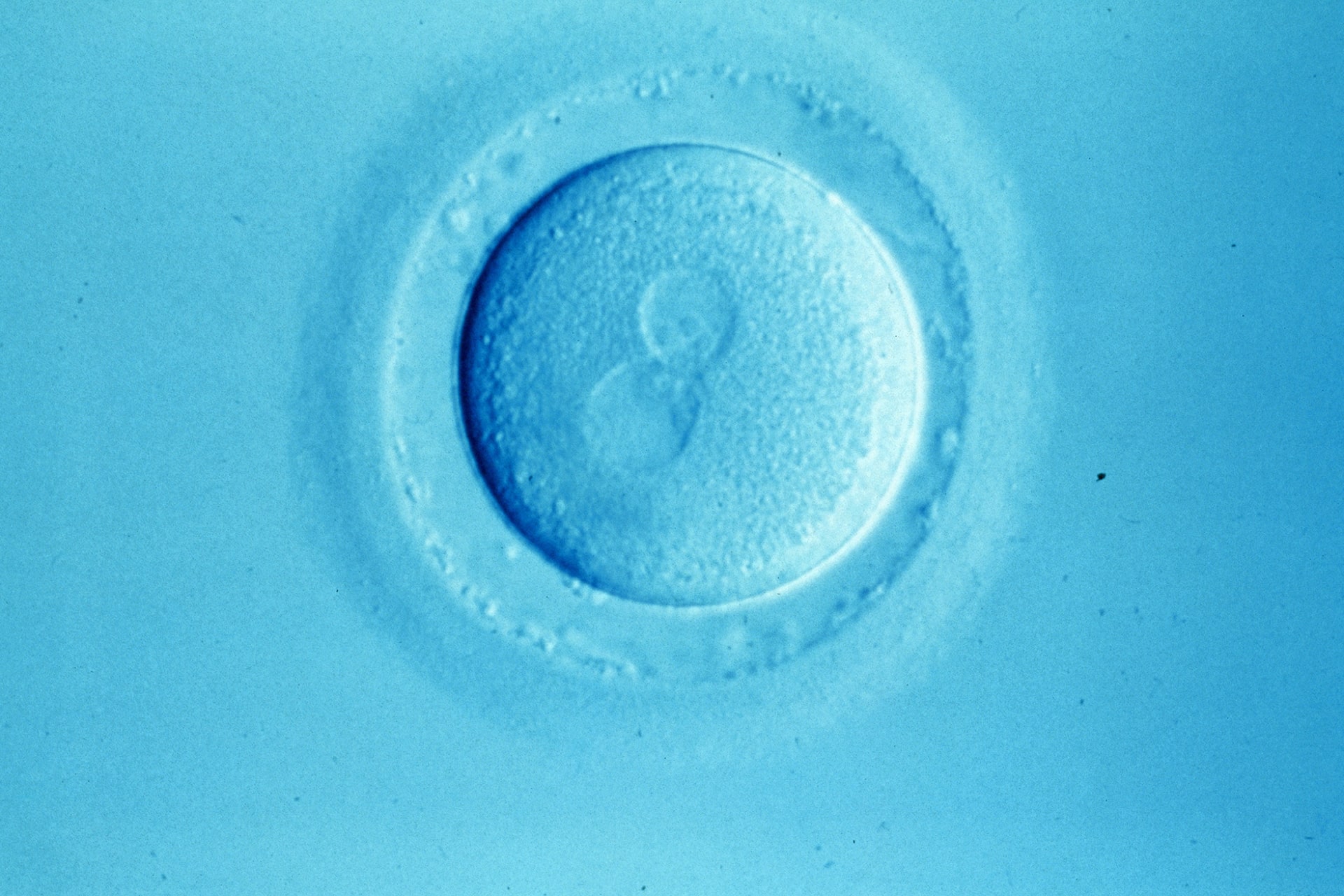
Human eggs appear to be protected from the age-related accumulation of genetic mutations in mitochondrial DNA (mtDNA).
Mitochondria generate most of the energy cells need to function. Although mitochondrial mutations tend to be harmless, these mutations can occasionally cause disease. To investigate whether such mutations increase with age in human oocytes, researchers used a DNA sequencing to identify mtDNA mutations in the blood, saliva and single oocytes (80 in total) from 22 women aged 20 to 42 undergoing IVF. The study, led by researchers at the Johannes Kepler University Linz, Austria, and Penn State University, Pennsylvania, found no evidence of an age-related increase in genetic mutations in the mtDNA of human egg cells.
'When we think about age-related mutations, we think about older people having more mutations than younger people,' Kateryna Makova, professor of biology at Penn State University and co-author of study told New Scientist. 'But expectation is not necessarily the truth.'
Published in Science Advances, the study found that while mtDNA mutations in blood and saliva cells did increase with age, mutations in the women's oocytes did not. The eggs' mitochondria had 17- to 24-fold fewer mutations than those in the blood and saliva, and there was no statistically significant increase in the number of mutations in the eggs. These findings suggest the presence of a mechanism that protects human eggs from age-related genetic damage.
'I think that we evolved a mechanism to somehow lower our mutation burden, because we can reproduce later in life,' Professor Makova told New Scientist.
Previous research has shown that egg cells accumulate chromosomal mutations (in the cell nucleus) as women age, making older mothers more likely to pass on chromosomal abnormalities to their children. Because mitochondria have their own DNA, which is inherited exclusively through the maternal line, scientists previously assumed that mitochondrial mutations would also increase with age. This study challenges that assumption.
Such a distinction could have implications for reproductive decision-making and assisted reproductive technologies. The authors concluded that the discovery that human eggs may be protected against age-related mutations are 'particularly timely as humans tend to reproduce later in life'.
The authors noted key limitations of the study, including the small sample size and lack of longitudinal data, and emphasised the need for further research.
'It is premature to apply these findings to clinical practice,' Professor Makova told Live Science. 'Our results should be replicated in a larger number of women and validated in other human populations.'
Using the same approach in an earlier study, the researchers found that mtDNA mutations increased in macaque oocytes until about nine years of age, their reproductive prime, and then remained stable. Dr Barbara Arbeithuber from Johannes Kepler University Linz and lead author of both studies told New Scientist: 'It would be interesting to also look at younger women; this might be also the case in humans.'
Sources and References
-
Human eggs don't accumulate as many mutations with age as we thought
-
Allele frequency selection and no age-related increase in human oocyte mitochondrial mutations
-
Human eggs have special protection against certain types of aging, study hints
-
Human eggs are protected from age-related genetic mutations, mtDNA study finds
Related Articles


Baby born from embryo frozen for 30 years
A baby has been born in the USA from an embryo frozen in 1994, the longest known gap between embryo freezing and live birth...


Mitochondrial donation: a triumph of scientific innovation – and so much more
Dr Andy Greenfield explores what it took to achieve the birth of eight healthy babies with donated mitochondria – not just scientific and technical advances but also ethical inquiry, public and patient engagement, the introduction of new laws and regulations, and the careful establishment of a new clinical pathway...

Fresh embryos may increase chance of IVF success for some women
Fresh embryo transfer could be the most effective option for women with a low likelihood of achieving a live birth through IVF...