

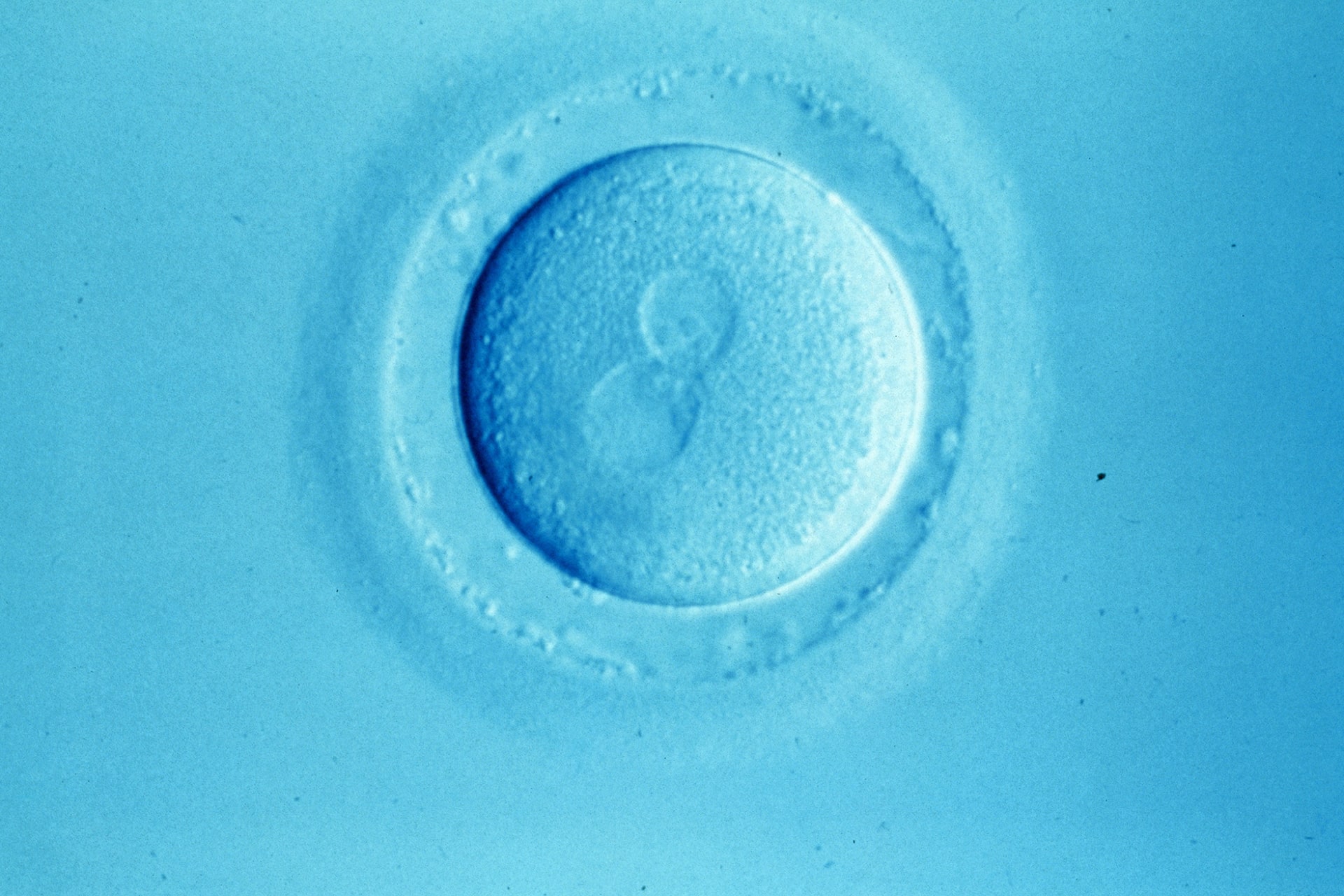
Testicular tissue preserved before puberty shows signs of being capable to create sperm after being grafted back into the same patient in adulthood, a proof-of-concept study reports.
Life-saving treatments such as chemotherapies and radiotherapies commonly used in cancer care can compromise fertility. Freezing sperm is not possible for boys who have not gone through puberty, so cryopreservation of immature testicular tissue, to be transplanted back later, is being explored as an experimental fertility preservation method (see BioNews 1273). Researchers in Belgium have now reported evidence of graft survival, improved blood supply, and active sperm production in testicular tissue preserved during boyhood and transplanted back into the same patient after puberty.
'This is a huge finding,' said Professor Ellen Goossens of Vrije Universiteit Brussel, co-first author of the preprint, which is yet to be peer reviewed, published on MedRxiv. 'Many more people will have hope that they can have biological children.'
The patient had received extensive chemotherapy as a child as part of his treatment against sickle cell disease. One of his testes was removed at the time, divided into smaller pieces and cryopreserved. Sixteen years later, the tissue fragments were thawed and grafted back into his body at various sites inside the testicle or just under the skin of the scrotum.
Two immotile sperm with abnormal morphology had been identified within the tissues before transplantation. One year after the procedure, the grafts were surgically retrieved to assess tissue integrity and cellular composition.
The authors reported that the grafts had survived and significantly enlarged, with varying levels of vascularisation present. Evidence of spermatogenesis was observed in two of the grafts within the testicle, and a single mature sperm cell was detected at one of these sites. 'The sperm that was isolated looked normal,' explained Professor Goossens. 'We still have to see whether it's able to fertilise an egg.'
Professor Rod Mitchell, a paediatric endocrinologist at the University of Edinburgh and clinical lead within the Edinburgh Fertility Preservation, a research programme that conducts similar work (see BioNews 1123 and 1333), told the Guardian: 'There is now proof of principle in humans that this approach is going to work, which is amazing.... If you freeze tissue and keep cells alive, then they should have the potential. You're putting the tissue back into the perfect environment to stimulate it. Scientifically and biologically, it makes sense.'
The authors acknowledged several limitations to the study, which has yet to undergo peer review. Only one patient was included, and the cryopreserved tissue contained an extremely low number of spermatogonial stem cells – the precursors of sperm – thereby restricting the generalisability of the results. In addition, the team were unable to predict graft growth and ongoing sperm production based on the non-invasive monitoring approaches they used during the study. More accurate biomarkers and refined monitoring strategies are therefore required.
According to the Guardian, the patient is now considering whether to proceed with IVF next, or to undergo a second round of transplantation to isolate more sperm.
Sources and References
-
Man produces sperm from testicular tissue frozen as a child in breakthrough trial
-
First successful transplant of human immature testicular tissue after gonadotoxic therapy during childhood: complete spermatogenesis in intra-testicular grafts
-
First-ever transplant of testicular tissue frozen for nearly 20 years found to produce sperm
Related Articles


Giving more choices to survivors of childhood cancer
Researchers working in childhood cancer survivorship explain how patient-derived stem cells could one day expand fertility restoration options, for boys whose cancer treatment has damaged their developing testes…

FILM: Male Infertility – Today's Insights, Tomorrow's Treatments
This film documents a PET event featuring researchers and practitioners at the forefront of tackling male infertility, discussing the latest insights and pioneering research that could transform treatment in future...
PET Podcast: Male Infertility – Today's Insights, Tomorrow's Treatments
Bringing you PET events as a podcast. The 48th episode of the PET podcast features researchers and practitioners at the forefront of tackling male infertility – Kevin McEleny, Professor Joris Veltman, Professor Rod Mitchell and Professor Sarah Martins da Silva...
Male Infertility: Today's Insights, Tomorrow's Treatments
The most recent PET event took place in Edinburgh and brought together researchers, clinicians and members of the public to examine advances in understanding and treating male infertility...


Event Review: Talking Bollocks
'Twenty minutes of stand up comedy about testicles? Count me in,' writes Grace Forsyth from the Edinburgh Festival Fringe...

Man receives transplant of his frozen prepubescent sperm-producing stem cells
A 26-year-old male cancer survivor received a transplant of his frozen prepubescent sperm-producing stem cells...
Man receives transplant of his frozen prepubescent testicular tissue
In a world first, doctors in Belgium have transplanted testicular tissue into an adult man after it was frozen prior to chemotherapy 16 years ago when he was a child...
First baby born in England following ovarian tissue graft
A baby has been born in England for the first time to a mother who had tissue from her ovary removed before breast cancer treatment, and then had it regrafted back on again...
First UK medical guidelines issued for trans fertility preservation
The Royal College of Obstetricians and Gynaecologists (RCOG) has published a first draft guideline on improving care for trans and gender diverse people accessing health services...