

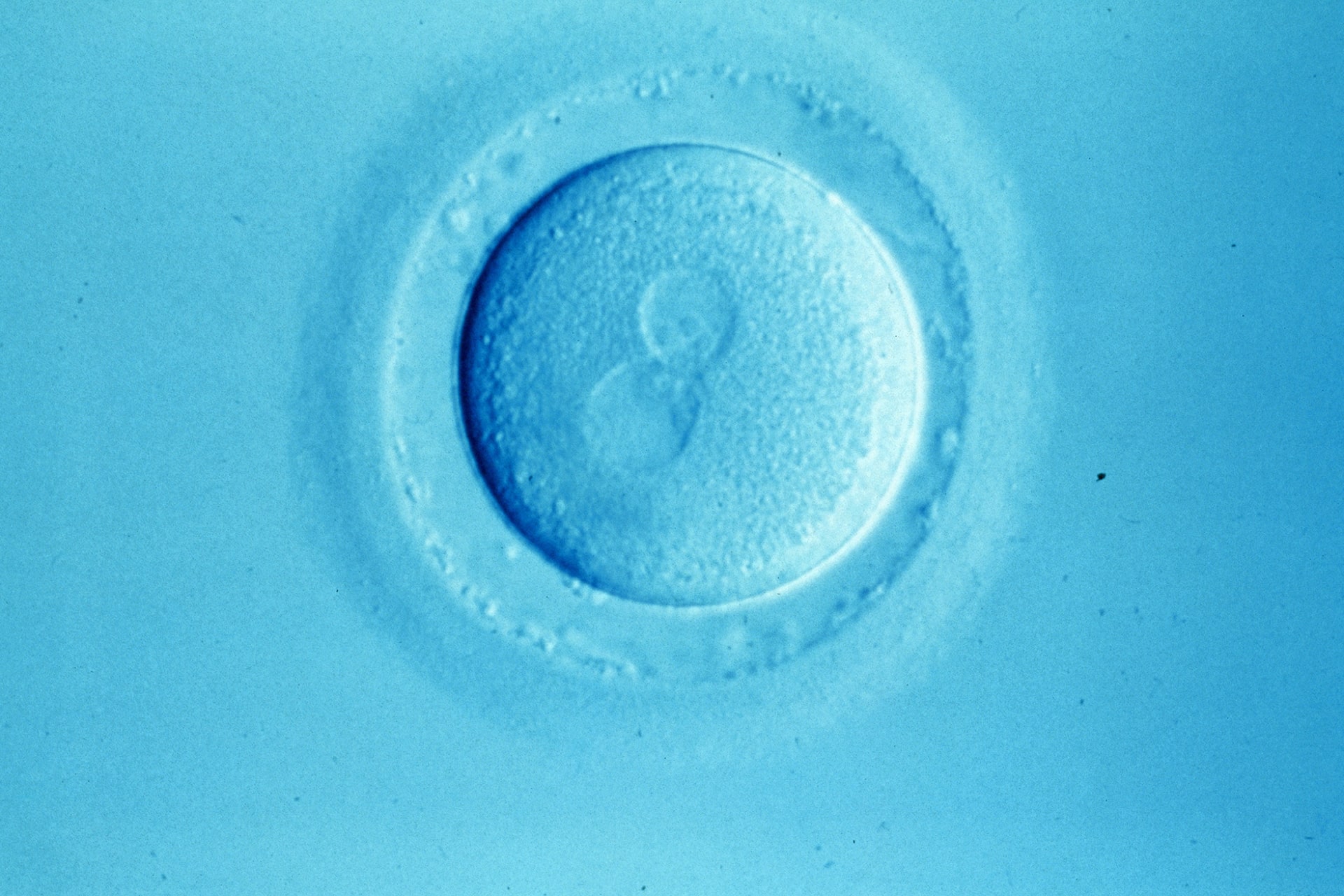
The most recent PET (Progress Educational Trust) event took place at the at the University of Edinburgh and brought together researchers, clinicians and members of the public to explore an under-discussed aspect of fertility, namely male infertility. The event – 'Male Infertility: Today's Insights, Tomorrow's Treatments' – was produced by PET in partnership with the Scottish Government, and with the support of the Society for Reproduction and Fertility.
The event began with a tour of the University's Anatomical Museum, which houses around 12,000 objects and specimens spanning 300 years of anatomy teaching. Following the tour, attendees gathered for an evening of talks chaired by PET director Sarah Norcross. The panel featured Kevin McEleny, Professor Joris Veltman, Professor Rod Mitchell and Professor Sarah Martins da Silva, who between them outlined various developments in research, clinical practice, diagnosis and treatment.
McEleny, chair of the British Fertility Society, opened by outlining the scale and significance of male infertility. He noted that male factors are implicated in up to half of all cases seen in fertility clinics, and described male infertility as the single most common reason for couples seeking fertility treatment. He also highlighted evidence suggesting that sperm may be declining globally in terms of both quality and quantity, referring to studies that suggest a 50-60 percent reduction in sperm concentration over approximately 40 years (see BioNews 911, 913, 1168 and 1243). This trend was initially observed in Western countries but has latterly been observed in South Asia, Africa, and Latin America as well.
Beyond fertility itself, McEleny emphasised that male infertility may be associated with broader health conditions. These include hypogonadism, diabetes and obesity, as well as an increased risk of certain cancers (including testicular, prostate, and colorectal cancer). He noted that ongoing research into genetic causes of infertility may further clarify these associations.
McEleny also discussed social and cultural aspects of male infertility. He stated that men may have less prior knowledge of reproductive biology than women, and may find it difficult to separate fertility from perceptions of masculinity. He noted that men may be more likely to internalise anxiety and less likely to seek support, although attitudes are changing.
Turning to clinical practice, McEleny described the importance of comprehensive assessment including detailed history-taking, genital examination, semen analysis and hormonal and genetic testing. He highlighted varicoceles as a treatable cause of male infertility that is often overlooked in some cases, and noted that treatment of varicoceles in men with impaired semen quality is now recommended in updated guidance from the National Institute for Health and Care Excellence (NICE). He concluded by calling for improved diagnostics, stronger clinical evidence for medical treatments, and improvements to (and better implementation of) the NICE Fertility Guideline.
Professor Veltman, director of the Institute of Genetics and Cancer at the University of Edinburgh, addressed the role of genomics in male infertility. He noted that identifying genetic causes has historically been challenging because men with infertility are typically born to fertile parents, limiting the usefulness of traditional inheritance-based approaches. However, advances in next-generation sequencing technologies – which enable the analysis of millions of DNA fragments simultaneously – have made new approaches possible.
He described his group's research involving the study of infertile men alongside their parents, enabling the identification of de novo mutations – genetic changes that arise spontaneously, and are not inherited from the previous generation. Such mutations are a significant cause of male infertility. When they occur in the germline, there is, in some cases, a 50 percent chance that they will be transmitted to the next generation, including to children conceived via fertility treatments.
Professor Veltman also provided examples of how genetic findings can inform clinical care. Certain types of AZF deletions are associated with a very low likelihood of successful surgical sperm retrieval (see BioNews 1275), while men with mutations in the CFAP47 gene on the X chromosome may have more favourable outcomes using ICSI. Because males inherit their X chromosome from their mother, sons will not inherit the mutation in this instance.
He observed that despite advances in research, genomic testing for male infertility has not been implemented widely in clinical practice within the UK, in contrast to implementation of genomic testing in relation to cancer and rare disease. He argued that this needs to change, and said that he and his colleagues are establishing a programme in Edinburgh to help address this gap.
Professor Mitchell, researcher and paediatric endocrinologist at the University of Edinburgh, focused on fertility preservation in boys undergoing treatment for cancer (see BioNews 1123). He described the case of a five-year-old boy diagnosed with a brain tumour, whose treatment – while potentially life-saving – carried a serious risk of permanently damaging his fertility, by destroying the spermatogonial stem cells in his testes that would ultimately be responsible for producing sperm.
For prepubertal boys in this predicament who are not yet producing sperm, the only option for fertility preservation that is currently practical is the surgical removal and cryopreservation of a small piece of testicular tissue, prior to treatment for cancer. This relatively minor operation involves removing a small section of tissue while preserving the testis, with the aim of using the tissue in future to restore fertility. Professor Mitchell explained that in Edinburgh, Oxford and elsewhere, the criteria used to determine eligibility for this procedure include risk of infertility, overall health and likelihood of survival. More than 3100 boys worldwide have now undergone such a procedure.
Professor Mitchell had previously discussed this approach to fertility preservation at other events produced by PET, both in person in Edinburgh (see BioNews 992) and online (see BioNews 1116 and 1119). On this occasion, however, he was able to report – with evident delight – that in January 2025, the world's first human testicular tissue transplant was performed by Professor Ellen Goossens and colleagues from the Free University of Brussels (VUB), Belgium (see BioNews 1273).
To this he added the news that Professor Goossens and her team have just published a preprint in medRxiv (which has not yet been peer-reviewed), describing evidence of complete spermatogenesis in the transplanted tissue – it seems that sperm have been observed under the microscope. No live birth has yet been reported, but clinical trials are underway in Edinburgh, Oxford and London, recruiting men who had tissue stored in childhood and who have been found to be infertile as adults.
Professor Martins da Silva, professor of reproduction and fertility medicine at the University of Dundee and and clinical lead for fertility services at NHS Tayside, discusseed current limitations in treatment options for male infertility. She argued there are no direct medical treatments available for infertile men, leaving IVF and ICSI as the only options for most couples. Her research focuses on the molecular biology of sperm, particularly the ion channels that regulate sperm motility and the cascade of events required for fertilisation.
She described how dysfunction in protein complexes that form ion channels, such as CatSper (see BioNews 345 and 1076), can prevent sperm from fertilising an egg even when standard semen analysis appears normal. This raises questions about the adequacy of current diagnostic tools. Professor Martins da Silva hypothesised that if sperm function can be enhanced pharmacologically by targeting these channels, then this could open entirely new avenues for treating male infertility, as well as potentially yielding non-hormonal male contraceptives (see BioNews 1208).
Professor Martins da Silva described ongoing research aimed at improving diagnostics and developing new treatments. This includes a large clinical study involving 2000 men across three European universities, combining standardised sperm function tests with advanced bioimaging and machine learning approaches. She concluded that changing the landscape of this field through better understanding, better diagnosis, and new treatment would have a significant impact worldwide, for patients and for reproductive science more broadly.
The chair of the event, Sarah Norcross, summarised the gaps in our knowledge of male fertility succinctly with the following remark. 'I still to this day cannot understand how we can put a man on the moon, and yet we do not know how a sperm swims, finds and fertilises an egg.'
The event concluded with an engaging set of audience contributions, addressing issue including the future of in vitro gametogenesis, the role of genetics in male infertility, and ways to improve awareness and education. By the end, it was clear that much remains to be understood in relation to male fertility, but the next decade could bring some exciting progress.
PET is grateful to the Scottish Government and the Society for Reproduction and Fertility for supporting this event.
Register for these upcoming PET events:
- What Does the NICE Fertility Guideline Update Mean for You?, taking place online on Wednesday 15 April 2026 – register here.
- What Is the Impact of Fertility Treatment on Patient Health?, taking place online on Wednesday 22 April 2026 – register here.
- What Is the Impact of Fertility Treatment on the Health of Resulting Children?, taking place online on Wednesday 29 April 2026 – register here.
Related Articles

Book Review: A Journey Through Male Infertility – Stronger together
Fertility counsellor Anthony Ryb reviews Pip Reilly's 'A Journey Through Male Infertility: Stronger Together', considering its aim to provide accessible support for men experiencing infertility and highlighting both its strengths and the gaps he feels limit its usefulness…

Giving more choices to survivors of childhood cancer
Researchers working in childhood cancer survivorship explain how patient-derived stem cells could one day expand fertility restoration options, for boys whose cancer treatment has damaged their developing testes…


The Genetics of Infertility: Causes, Choices and Treatments
Genetic testing is beginning to identify causes of infertility that were previously unexplained. PET's latest event brought together clinicians and researchers to discuss the opportunities and limitations of reproductive genetics...

FILM: Male Infertility – Today's Insights, Tomorrow's Treatments
This film documents a PET event featuring researchers and practitioners at the forefront of tackling male infertility, discussing the latest insights and pioneering research that could transform treatment in future...

In vitro gametogenesis: The case for an anticipatory approach
Lead author of the Regulatory Horizons Council's report on in vitro gametogenesis, Dr Andy Greenfield, argues that the UK should begin preparing now for emerging reproductive technologies, taking an anticipatory approach to regulation...
Event Review: Talking Bollocks
'Twenty minutes of stand up comedy about testicles? Count me in,' writes Grace Forsyth from the Edinburgh Festival Fringe...

Man receives transplant of his frozen prepubescent sperm-producing stem cells
A 26-year-old male cancer survivor received a transplant of his frozen prepubescent sperm-producing stem cells...
Y chromosome genes influencing sperm development identified
Genes on the Y chromosome that regulate the development of sperm and influence fertility in male mice have been identified...
Man receives transplant of his frozen prepubescent testicular tissue
In a world first, doctors in Belgium have transplanted testicular tissue into an adult man after it was frozen prior to chemotherapy 16 years ago when he was a child...