

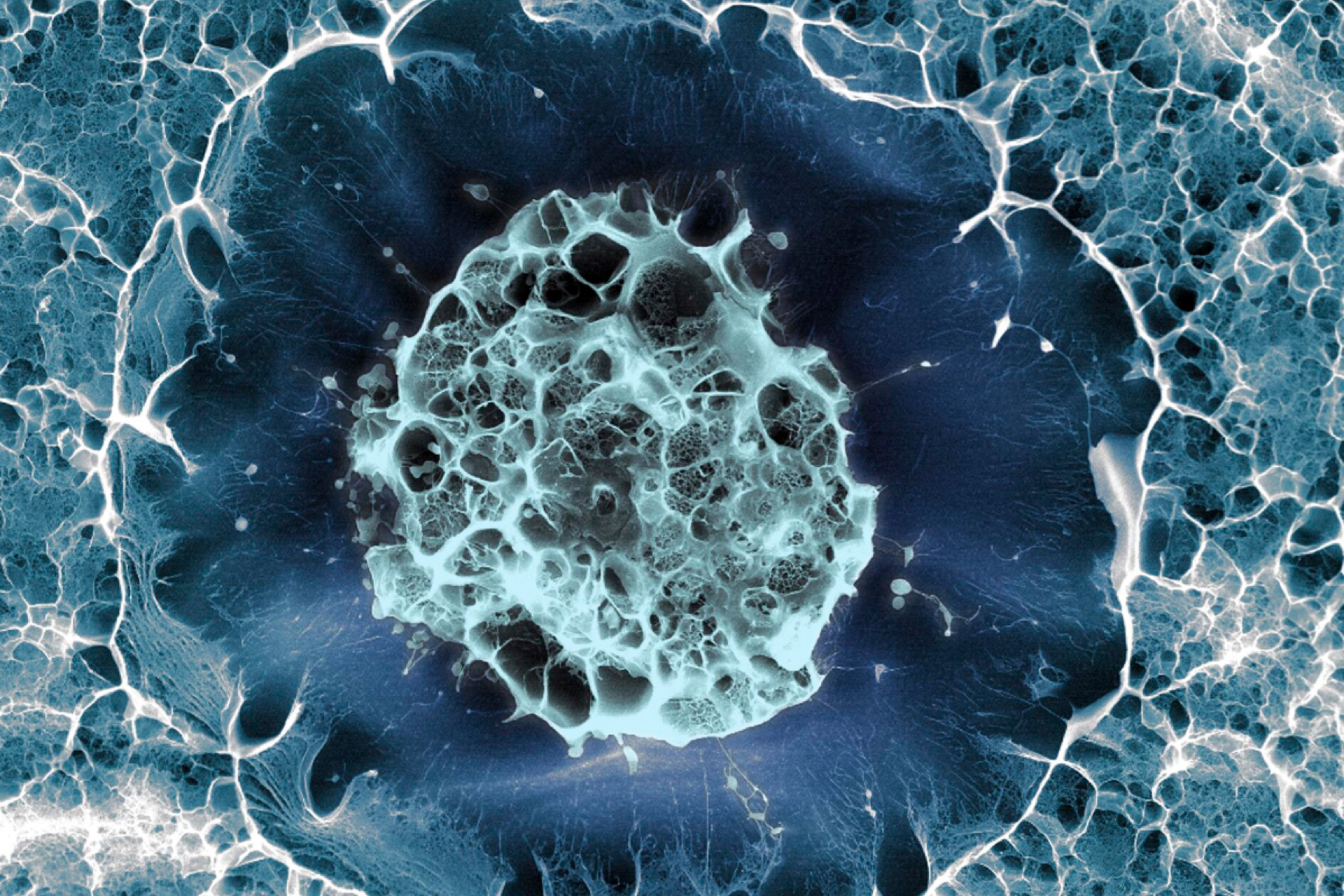
A simplified stem-cell-based embryo model (SCBEM) – a model of the early human embryo – has revealed a key mechanism required for blastocyst cavity formation.
The early stages of human development, including blastocyst formation, are essential for healthy embryo development. Disruptions during this period can result in miscarriage or developmental disorders. The blastocyst is an early-stage embryo formed a few days after fertilisation. Identifying the pathways that control blastocyst formation has remained challenging, partly due to a lack of accurate laboratory models. Now, scientists at the King Abdullah University of Science and Technology (KAUST), in Saudi Arabia, have developed a simplified blastoid (a type of SCBEM that models the blastocyst stage of development). Using their model, they found that V-ATPase enzyme activity is essential for healthy blastocyst formation.
Dr Mo Li, an associate professor of biomedical sciences at KAUST who led this study, said: 'Early development depends on precise coordination between molecular signals and physical forces. Our work uncovers the molecular machinery underlying this coordination, which drives the formation of one of the embryo's earliest structures.'
Published in Cell Research, the team created their blastoids by treating human stem cells with a single chemical signal, dimethyl sulfoxide (DMSO). This triggered the cells to self-organise into blastocyst-like structures. The blastoids mimic key features of early development including formation of a fluid-filled cavity, and organised cell layers. The group found that activity of the V-ATPase enzyme, which regulates acidity within cell compartments, is required for cavity formation in blastoids. Blocking the activity of V-ATPase, or genetically preventing its production, resulted in failed blastoid development. Additionally, inhibiting the enzyme caused similar defects in cavity formation in both human and mouse embryos.
Previous research has explored the growing use of blastoid models to study early development, including research showing that mouse stem-cell-based embryo models can mimic natural blastocysts (see BioNews 1306) and studies in which development was experimentally paused (see BioNews 1259). However, previous blastoid models have typically relied on complex combinations of signalling molecules and culture conditions to guide stem-cell self-organisation, which can be time-consuming and expensive to optimise.
The new approach developed at KAUST relies only on DMSO treatment, providing a simpler and more standardised method for generating blastoids. The group suggested that this provides a more reliable way to study the pathways involved in early embryo development and implantation.
The authors conclude: 'These findings highlight the utility of the DMSO model for dissecting pathways critical to early developmental events and provide new insight into conserved cellular processes in early human and mouse embryogenesis.'
The study comes amid growing international interest in the regulation of human SCBEMs. In the UK, such research is governed by the UK's Code of Practice for the Generation and Use of Human Stem-Cell-Based Embryo Models (see BioNews 1246a and 1246b).
Sources and References
Related Articles

What are the morally relevant features of stem-cell-based embryo models?
Dr Naomi Moris and an international group of colleagues propose three broad categories of ethical value and five categories of morally relevant biological features that can inform oversight of research involving human stem-cell-based embryo models...

Base editing reveals gene essential for human embryo formation
Using base editing, a highly precise method of genome editing, scientists have investigated the role of the NANOG gene in human embryos for the first time with this approach...
Stem-cell-based embryo model mimics human blood development
A stem-cell-based embryo model capable of producing human blood cells has been created in the lab, mimicking early embryonic development...
Mouse stem-cell-based embryo models mimic natural blastocysts
Mouse stem cells have been used to create an embryo model that mimics the stage where an embryo implants into the uterus...
Development paused in human blastoids
Stem cell models of early preimplantation human embryos have been shown to retain the capacity to pause development, using a mechanism observed in other mammals...
First dedicated guidance for embryo model research published by experts
A code of practice to govern the use of stem-cell-based embryo models in research has been developed by an interdisciplinary group of experts, drawn from institutions across the UK...

Creating a Code of Practice for stem-cell-based embryo model research
PET and Cambridge Reproduction have jointly published a new Code of Practice for the Generation and Use of Human Stem Cell-Based Embryo Models. Members of the Working Group that drafted the Code reflect on its significance...