


A comprehensive biobank of patient-derived tumour organoids has been developed to map genes that cancer cells depend on for growth and survival.
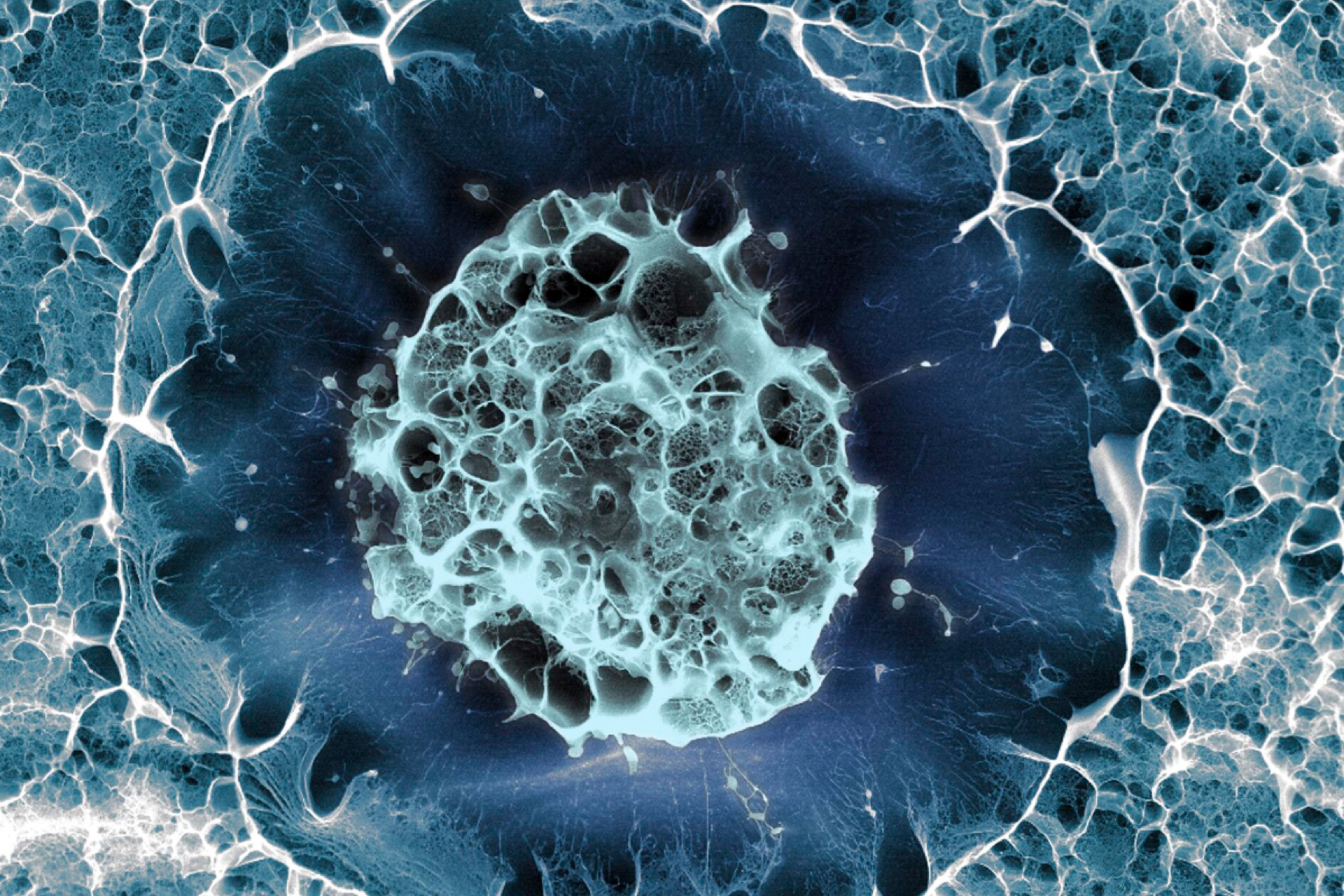
Patient-derived organoids have emerged as an important tool to study cancer because they can reproduce many of the characteristics of the tumours from which they are derived and capture the heterogeneity of human cancers. However, existing organoid biobanks are relatively small, and many lack comprehensive genetic characterisation, which limits their widespread use for research. A team from the Wellcome Sanger Institute in Hinxton, near Cambridge, developed one of the world's most extensive collections of characterised patient-derived organoids to study cancer.
'By building this organoid biobank, which is a long-term resource of cancer models, we've created a powerful new way to study cancer in models that much more closely resemble patient tumours,' said Dr Carmen Herranz-Ors, a postdoctoral fellow at the Wellcome Sanger Institute and first author of the study published in Nature.
This new open-access biobank consists of 256 tumour organoids derived from five different types of cancer (colorectal, oesophageal, ovarian, pancreatic and gastric cancer). To develop this biobank, samples were collected from clinical sites in Birmingham, Cambridge, Glasgow, London and Southampton. The organoids are linked to clinical information from the patient they came from, including information about disease stage, risk factors and previous treatments.
Researchers sequenced the DNA of the organoids and corresponding normal samples and, where available, the original tumours, to characterise the organoids and compare them with the tumours from which they were derived. The biobank included 13 patient-matched organoids from six patients at different time points, including four pre- and post-treatment pairs. These allowed researchers to investigate how individual tumours changed over time and following treatment.
Researchers used CRISPR to systematically 'knock out' genes across the human genome in 162 organoids. By turning off individual genes and observing the effect on tumour cell fitness, scientists can determine which genes are important for cancer cell growth and survival.
'Applying CRISPR screening across these models enabled us to pinpoint the specific genes that different cancers rely on to grow and survive,' said Dr Herranz-Ors.
The screens identified both common and cancer-specific gene dependencies, which could help researchers identify and prioritise potential drug targets and investigate why different tumours respond differently to treatment.
'Organoids give scientists the ability to study cancer in richer detail, giving them new insights into its weak spots. Research like this brings us closer to new treatments and with that the hope of more people living longer, better lives, free from the fear of cancer,' said Dr Catherine Elliott, director of research at Cancer Research UK, London, who was not involved in the research.
Sources and References
Related Articles


CRISPR may lead to improvements in cancer immunotherapies
CRISPR/Cas9 has been used to identify genome editing targets that significantly enhance the efficiency of a targeted therapy for myeloma, a type of cancer...
Organoid models of paediatric liver cancer developed
Model livers, which contain cells that are genetically identical to tumour cells, have been developed to study a rare paediatric liver cancer...
Bone marrow organoids developed to study blood cancers
The first human bone marrow organoids have been developed in the lab, to help in the development of blood cancer treatments...
Organoids give insight into the development of cervical cancer
Molecular changes that give rise to cervical cancer have been identified using novel 'organoid' models...
Organoids used to study ovarian cancer
Mini versions of mouse reproductive organs have been used to investigate how the most lethal ovarian cancers develop...