


A developmental mechanism that restricts nerve regeneration has been identified using neural organoids.
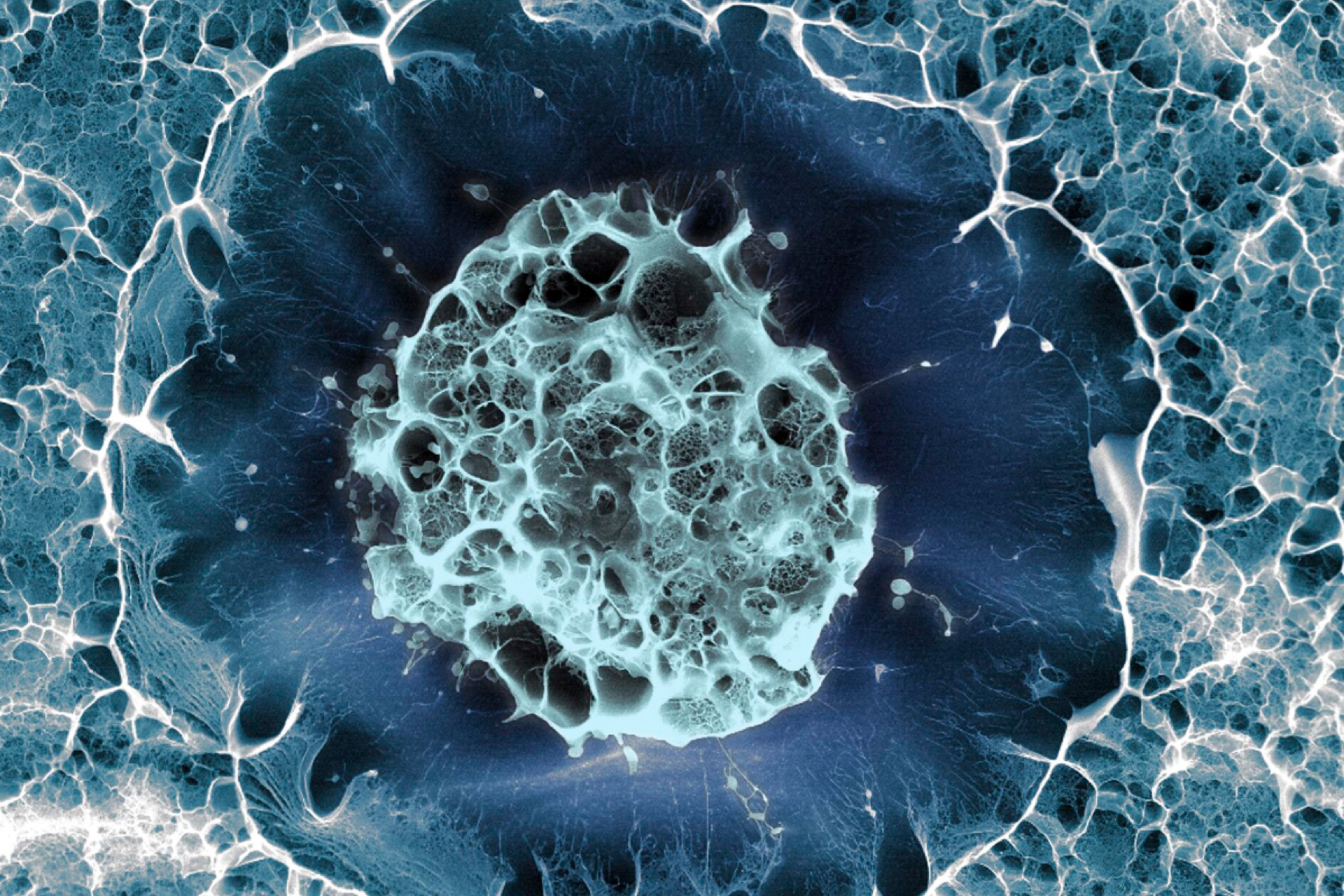
Researchers at the University of Cambridge developed an assembly of brain and spinal cord organoids that mimic the neural circuits of the human central nervous system. They differentiated human embryonic stem (ES) cells into brain and spinal cord tissue, which self-organised into connected organoids. Organoids are three-dimensional cell cultures that model aspects of the structure and function of human organs. Using the organoids, the researchers investigated why nerve cells in the central nervous system lose their ability to regenerate during development.
'When the brain and spinal cord are damaged, the nerve fibres that carry movement signals from the brain to the spinal cord rarely grow back. That's why paralysis is usually permanent,' said Dr András Lakatos from the Department of Clinical Neurosciences at the University of Cambridge and senior author of the study published in Cell Reports. 'Our model provides a good indication that this block happens during development, and it can still be reversed after this point.'
The team focused on corticospinal-like neurons present in their organoids. In the body, corticospinal neurons extend from the brain to the spinal cord and are essential for controlling voluntary movement. When their axons – the long cell projections that transmit signals to other neurons or to muscles – are damaged, these rarely regenerate. To investigate why this regenerative ability is lost, the researchers compared younger and more mature brain-spinal cord organoids after inducing injury to corticospinal axons.
The results showed that axons in more mature organoids had a much lower capacity for regrowth than those in younger organoids. The researchers identified FGF2 signalling as a developmental mechanism underlying this loss of regenerative ability. Blocking FGF2 signalling restored axon regrowth in the mature organoids.
'Today, we are entering a new era of hope and possibility for the 15 million people worldwide living with a spinal cord injury,' said Louisa McGinn, chief executive of Spinal Research. 'The next five years present an unprecedented opportunity to change what's possible for people living with spinal cord injuries. Breakthrough therapies are nearing clinical reality, and frontier technologies are creating bold new pathways toward repair and recovery.'
Although many other factors, including scar tissue and immune responses, also limit nerve regeneration after spinal cord injury, the study provides new insight into why regenerative capacity declines during development. The researchers conclude that their organoid model provides a way to investigate mechanisms that limit nerve regeneration and to evaluate potential strategies for promoting axon regrowth.
Sources and References
-
Lab-grown brain-spinal cord model shows 'irreversible' nerve damage may be reversed
-
A human corticospinal organoid-slice connectoid model informs enhancer strategies for post-injury axon regrowth
-
Lab-grown brains could one day help reawaken nerve regeneration
-
Irreversible nerve damage could be reversed, says University of Cambridge model
Related Articles

What are the morally relevant features of stem-cell-based embryo models?
Dr Naomi Moris and an international group of colleagues propose three broad categories of ethical value and five categories of morally relevant biological features that can inform oversight of research involving human stem-cell-based embryo models...

Human brain organoids kept for more than five years in a dish
Human brain organoids have been kept in culture for more than five years, extending the period over which these models of human brain development have previously been maintained...
Brain organoids could guide treatment of Alzheimer's disease
Brain organoids, and the tiny particles they secrete, may help to stage early Alzheimer's disease and evaluate drug response...
Book Review: Disembodied Brains – Understanding our intuitions on neuro-chimaeras and human brain organoids
Professor John Evans explores public and expert views on human brain organoids and neural chimaeras. He highlights the tension between scientific promise and public unease, providing an essential guide for anyone working with these emerging technologies...
Brain organoids help identify Alzheimer's drug target
A potential new gene target for Alzheimer's disease treatment has been identified using brain organoids...
Human brain organoids merge with injured rat brains to restore function
Brain organoids made from human stem cells can integrate successfully with the visual system in rats, offering hope for repairing brain damage...
Brain organoids reveal genetic mutations affect emergence of neurons in people with autism
Mutations in three autism-associated genes have been shown to affect the pace that certain types of neurons emerge in the developing brain...
Brain organoids to help identify therapies for neurodegenerative disease
Miniature brain-like structures grown in the laboratory are being used to uncover mechanisms of neurodegenerative diseases and to screen for effective treatments...