

A potential new gene target for Alzheimer's disease treatment has been identified using brain organoids.
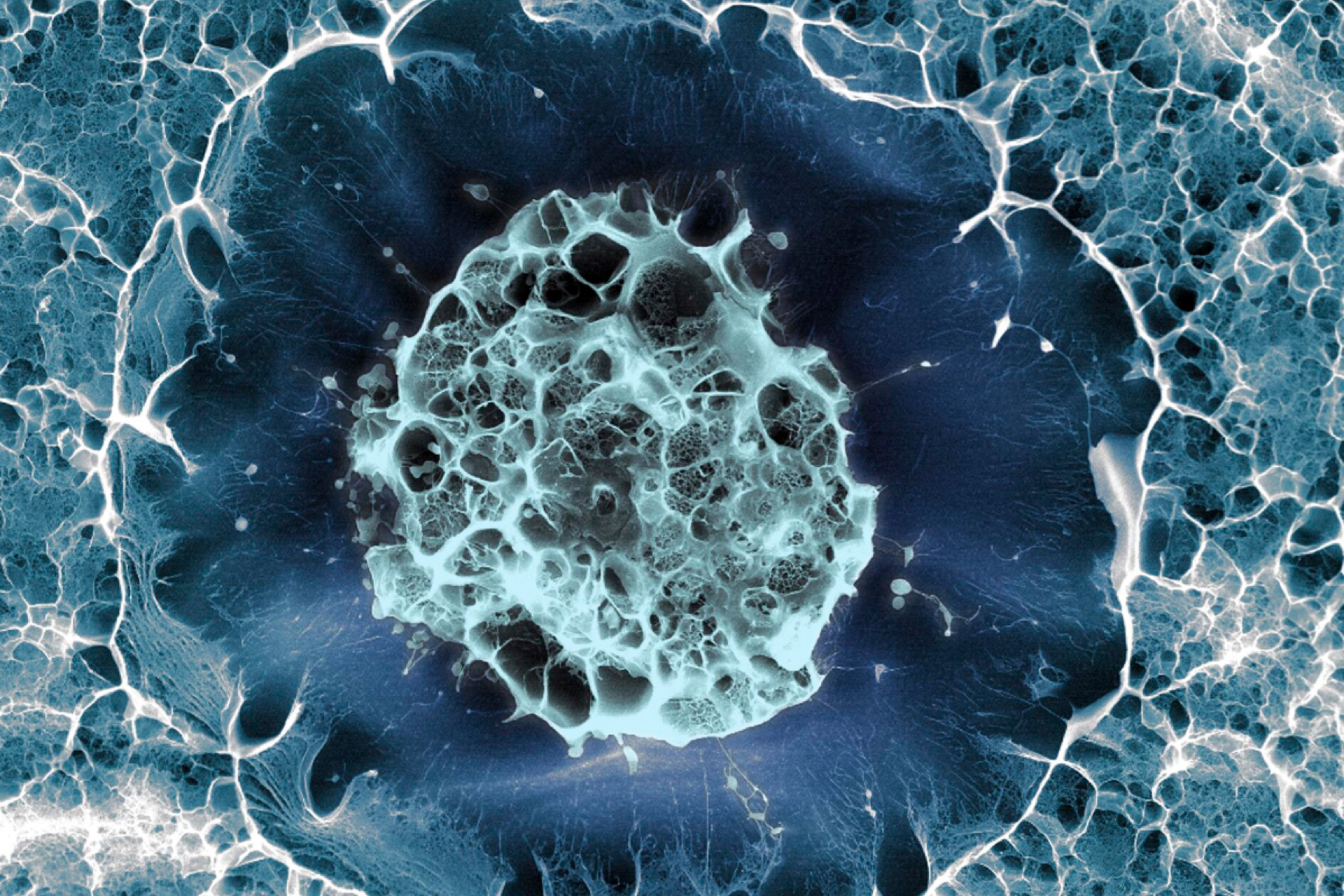
Alzheimer's causes changes in brain development that begin years before symptoms are observed. This is especially true in familial Alzheimer's disease, a subset of the condition caused by specific mutations that tend to cause earlier onset dementia. Due to the difficulty in studying the brains of living people, researchers at ShanghaiTech University, China, used stem cells from patients with genetically-inherited Alzheimer's disease to create organoids.
'[Previous studies] only focused on the description of phenotypes in Alzheimer's disease cerebral organoids, but did not conduct further studies on specific pathogenic mechanisms' said the authors of the study published in Stem Cell Reports.
Patients with two different types of familial Alzheimer's-causing mutations took part in the study. Organoids carrying each mutation displayed characteristics of the disease, such as increased cell death and changes in gene expression.
The team noted that one gene – TMSB4X, which encodes a protein called Tβ4 – exhibited decreased expression in both organoids. They tried treating the organoids with Tβ4 to compensate for this reduction, which improved the survival of neurons and reduced the abnormal expression of other genes.
To test how Tβ4 could affect disease progression later in life, they used a mouse model of one of the Alzheimer's mutations, which was dosed with a virus vector that causes increased expression of Tβ4. They observed that several defects in neuronal function in the mice were reduced, alongside the signs of Alzheimer's pathology in their brains.
The team suggest that TMSB4X could protect neurons from dysfunction in Alzheimer's, and that its reduced expression in the organoids may be part of the reason that they showed aspects of the disease.
'This study has identified Tβ4 as a neuroprotective factor that may mitigate altered neurogenesis and Alzheimer's disease pathology, highlighting a potential for disease prevention' said the authors, led by Professor Zhen-Ge Luo.
More research will be needed to determine the therapeutic relevance of the findings. Organoids only model early brain development, and it is impossible to tell whether the effects of Tβ4 would be similar in older humans. The study also does not explain the mechanism by which Tβ4 acts as a neuroprotective factor.
Sources and References
Related Articles

Human brain tissue grows and connects inside engineered mice
Human organoids transplanted into mouse brains can grow and form connections with the surrounding nervous system...

Drug candidate targets DNA damage in Alzheimer's disease model
A drug candidate previously tested for safety in humans has reduced several disease-associated features in a mouse model of Alzheimer's disease...
Human organoids suggest that 'irreversible' nerve damage might be reversed
A developmental mechanism that restricts nerve regeneration has been identified using neural organoids...

Securing an ethical future for research using neural organoids
Coordinated best practice guidance and a pivot to a forward-looking regulatory approach to emerging biotechnologies can enable neural organoid research to flourish responsibly, protecting ethical standards and public confidence...
Brain organoids could guide treatment of Alzheimer's disease
Brain organoids, and the tiny particles they secrete, may help to stage early Alzheimer's disease and evaluate drug response...
Organoids show head injuries may reactivate dormant virus and trigger Alzheimer's
Repeated head injuries, such as concussions, may increase the risk of Alzheimer's disease and dementia by reactivating the herpes simplex virus in the brain...
Brain organoids to help identify therapies for neurodegenerative disease
Miniature brain-like structures grown in the laboratory are being used to uncover mechanisms of neurodegenerative diseases and to screen for effective treatments...
Cerebral organoids show early signs of dementia
A mutated protein associated with Alzheimer's disease may trigger the death of brain cells known to be vulnerable in frontotemporal dementia...